Chapter 24: The Advocate

Now that Ishmael has properly begun his fateful voyage, this book will freely shift between narrative and non-narrative sections with no transition necessary. Ishmael doesn’t need an excuse to go off on a tangent at sea, there’s plenty of free time to sit around and think his thoughts.

advocate2

This is the first chapter where we’re not following the narrative at all. This isn’t inspired by something in the last chapter. It’s not an anecdote connected to some incident that we get a glimpse of. It is purely Old Ishmael rambling about something. The narrative chain has been broken. The next time we pick it up, it may be hours after the Pequod left port, or months. We have no way of knowing.

Continue reading “Chapter 24: The Advocate”

Chapter 23: The Lee Shore

Ah, this chapter.

lee1

This is one of the shorter ones in this massive tome. Not the shortest, I don’t think, there’s a chapter later on that’s only a single paragraph. But this one is definitely punching above its weight class when it comes to interesting thematic and philosophical meat to chew on versus length. Continue reading “Chapter 23: The Lee Shore”

Chapter 22: Merry Christmas

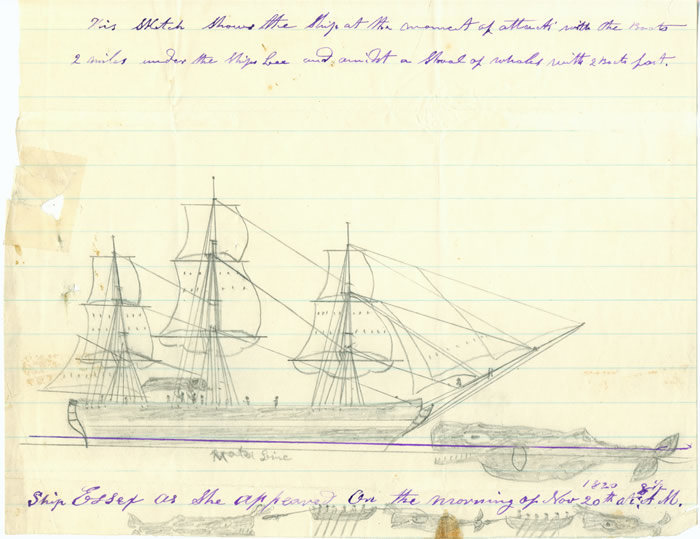
Merry Christmas! Boy, the timing on this one sure didn’t work out. Yes, as it turns out, the Pequod launches on Christmas day of… some… unknown year? I could just go grab the same date as the launching of the Essex, the real, actual whaling ship that was sunk by a sperm whale, and say “ah yes, clearly this is Ishmael recounting his voyage on that famous boat through the Medium of Fiction” or some such thing.

merry1

But, as it happens, the sinking of the Essex is mentioned in this book, by Ishmael, as proof that it is in fact possible for a whaling ship to be sunk by a whale. Ah, but I’m getting ahead of myself, that’s not for a while, I don’t think. Let’s get into today’s chapter. Continue reading “Chapter 22: Merry Christmas”

Chapter 21: Going Aboard

It’s time! Time to get in a boat and go hunt some actual, factual, living whales.

aboard3

Well, it’s not quite time for the hunting part yet, but it is time for this most famous of American maritime novels to actually get to the part where they’re on the ocean. Technically, they’ve already been there, it’s hard to avoid when you’re going to Nantucket, but you know what I mean! The whaling voyage! It’s… well, it’s time to go aboard, as the title says. Let’s get into it.

Continue reading “Chapter 21: Going Aboard”

Towards a Better Roguelike: Breaking Down the JRPG

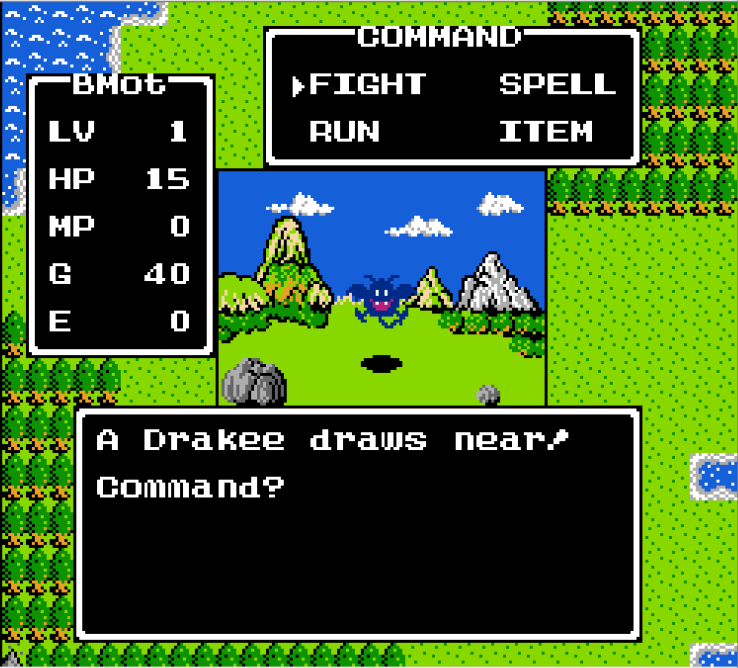
I said in my first post that I wanted to make a roguelike JRPG. But what does that even mean, exactly? What are the fundamental features that make a game a JRPG? How could those best be translated into the traditional roguelike framework? What do they bring to the table in terms of clarity and flexibility?

jrpg1

Good questions, all. Let’s get into it! Continue reading “Towards a Better Roguelike: Breaking Down the JRPG”

Chapter 20: All Astir

Today’s chapter is pretty short and breezy, but still does some important work. As we approach the fateful voyage of the Pequod, the omens and portents of its ruin are gathering thick in the air.

astir1

But, there are still the final preparations to make. So many little things must be taken care of. The ship will be away from land for three whole years, so they must plan for every eventuality. Continue reading “Chapter 20: All Astir”

Yakuza Kiwami: A Strong Foundation

I have kind of a strange history with the Yakuza series.

20190219182603_1

Back in the PS2 days, it was just sort of another game on the shelves among hundreds. I had no idea what it was about, other than Japanese organize crime, or even what kind of game it was. As a Nintendo fan going way back, the fact that it was made by SEGA was meaningless to me, and if anything made me less inclined to give it a shot. Continue reading “Yakuza Kiwami: A Strong Foundation”

Towards a Better Roguelike: Types of Randomness

Roguelikes are a genre defined by randomness. It’s the primary thing that sets them apart from other games. Even when they’re not really RPGs at all, a roguelike will have a level that is randomly generated. Or rather, what is called “procedural generation”, because true randomness is like a whole thing involving complicated mathematics that I’m not even gonna get into.

rando1

Randomness is something that should be used carefully, though. Especially when it comes to actual gameplay, it’s easy to lean on it too much and end up with a mess of a game. You can’t get away with making absolutely everything random, the chances of getting something that’s even playable are tiny. Continue reading “Towards a Better Roguelike: Types of Randomness”

Chapter 19: The Prophet

Today we’re going to take a look at… The Future! Or, at least, those who claim to have knowledge of the future, and those who really do, in some sense.

prophet1

This chapter is another fun one. Some good dialogue, and some more legend-building for the mysterious captain of the Pequod. It’s funny, there isn’t actually very much dialogue in Moby Dick, but what is there shows that Melville is very skilled at writing it. Goes to show that this book is odd not because he’s covering up for his faults, but because he’s trying something new. Continue reading “Chapter 19: The Prophet”

Chapter 18: His Mark

Now that Queequeg’s religious obligations have been dealt with, we can get back to the business at hand: going on a whaling voyage! Or at least preparing for one.

mark1

This is a nice little chapter, we get some more of Peleg and Bildad, and see the contrast of how they treat Ishmael and his bosom pal. We’ve got some real forward narrative momentum at this point, I don’t think there’s another fully non-narrative chapter until they’re off on the voyage proper. Continue reading “Chapter 18: His Mark”