
Another week gone by of 2025, and the world continues to fall into madness.
But at least my little slice of it is relatively calm and peaceful. It’s pouring down rain here today, and will be for the next week or so, and I love it. My favorite weather, as a lifelong resident of the Pacific Northwest. Even living in the middle of a city, there’s a certain peaceful coziness that comes from settling down inside on such a day that is utterly unmatched, at least in my personal experience.
Summary
After leaving Pip below, Ahab now resides on the deck of the Pequod twenty four hours a day. As a result, the atmosphere of the ship has become grim and incredibly subdued. Not even Stubb is able to make his habitual jokes under the baleful and constant gaze of the ship’s captain. And Ahab in turn is constantly under Fedallah’s gaze; the two are never far apart, but never speak to one another.
Having arrived at the location on the globe where Moby Dick is most likely to be found, and especially after meeting the Rachel who encountered him only recently, everyone on board is convinced that they will soon encounter that fateful whale. Ahab yells at the crew every hour on the hour during daylight, asking what they see.
Eventually, after a few days, Ahab becomes paranoid, not sure that the crew would sing out even if they did spot a spout on the horizon. He resolves to do the job himself, and arranges a little basket to sit in, to then be hoisted into the rigging, even higher than the mastheads. He asks Starbuck to watch the rope securing his seat down on the deck, as is customary when an arrangement like this is made on a ship.
As Ahab sits there, far above the ocean, keeping an eye out in all directions, a seahawk happens to grab his hat and fly off with it, and then drop it into the ocean, far ahead of the Pequod‘s bow.
Analysis
Wow, what a chapter this is. Really sets the scene for the end of this story, getting across the oppressive and airless tension of the ship, everyone holding their breath as they go about their business. Just look at this, from the opening paragraph:
As the unsetting polar star, which through the livelong, arctic, six months’ night sustains its piercing, steady, central gaze; so Ahab’s purpose now fixedly gleamed down upon the constant midnight of the gloomy crew. It domineered above them so, that all their bodings, doubts, misgivings, fears, were fain to hide beneath their souls, and not sprout forth a single spear or leaf.
Now that they’re in the home stretch, Ahab’s obsession is intensifying, as we’ve seen. He overcame the forces of nature that tried to push him back from his purpose, and he overcame the direct challenge to his mission in the form of Starbuck attempting to start a mutiny. Now he simply has to hold all that in place until they can spot the damn whale and kill it.
The Shadow and the Stone
We get some real fun dualism stuff with Ahab and Fedallah in this chapter. Ahab is perfectly solid and physical, resolute in his posture, standing on deck even as he may slumber, concerned only with the physical mechanics of the task at hand.
Meanwhile, Fedallah holds his own vigil over his subject, and the imagery suggests him as more of a supernatural, mystical, and insubstantial presence:
Such an added, gliding strangeness began to invest the thin Fedallah now; such ceaseless shudderings shook him; that the men looked dubious at him; half uncertain, as it seemed, whether indeed he were a mortal substance, or else a tremulous shadow cast upon the deck by some unseen being’s body.
Fedallah is a mere shadow cast into the world by some supernatural force. God, I still find him one of the most fascinating characters in this book, and wish he was given more substance, similar to Queequeg, but alas. Melville is content to leave him a mere dash of oriental flavor and diabolism; a spice to make Ahab’s fate all the more certain.
If you were to expand out from what we have in this chapter, you could see a parallel between this parsee and our own narrator, Ishmael. They are both seemingly obsessed with Ahab, his iron will and devotion to this bizarre and impossible goal. Almost mesmerized by the insanity of actions that they cannot fully comprehend, drawn to the self-destruction like a moth to a flame.
Layers of Fiction
After all, the fictional author Ishmael, in writing this book, spills a tremendous amount of ink speculating on Ahab’s motives and thoughts. Though there is still an interesting dynamic to me where it seems like some chapters are purely omniscient and not from our erstwhile narrator, those that concern the most private thoughts and true actions of the crew.
Take, for example, the last chapter, where the action was written like a stage play. This device has popped up a few times before, where the folksy narration fades to the background and a mere record of events takes precedence. In a modern novel, this could be conveyed as transcribed recordings of some kind, but obviously such things did not exist in the 1850s.
Instead, Melville employs the device of a legal transcript, or a stage play. The closest thing to a straight reporting of the truth that could exsit to him, at the time.
The thing that really stood out to me in this chapter was this sentence, towards the end when Ahab is being lifted aloft, after he elects Starbuck to watch his lifeline:
—it was strange, that this was the very man he should select for his watchman; freely giving his whole life into such an otherwise distrusted person’s hands.
As readers, we know why Ahab feels secure in handing that line to Starbuck. The first mate has already had ample opportunity to murder his captain, and did not take it, which Ahab is also well aware of. He is compeltely confident that he is safest in those hands which have already declined to end his life in rebellion.
But Ishmael seemingly doesn’t know that! As if he is not privy, entirely, to the words in his own book, describing the recent encounters between the two men. As if this fictional artifact which we read was compiled from separate sources, one consisting of Ishmael’s florid philosophical musings and autobiogrpahy, and another of true transcripts somehow taken from the doomed ship.
Kind of a fascinating and almost post-modern idea, giving this work layers of fictionality like that.
The Last Refuge Falls
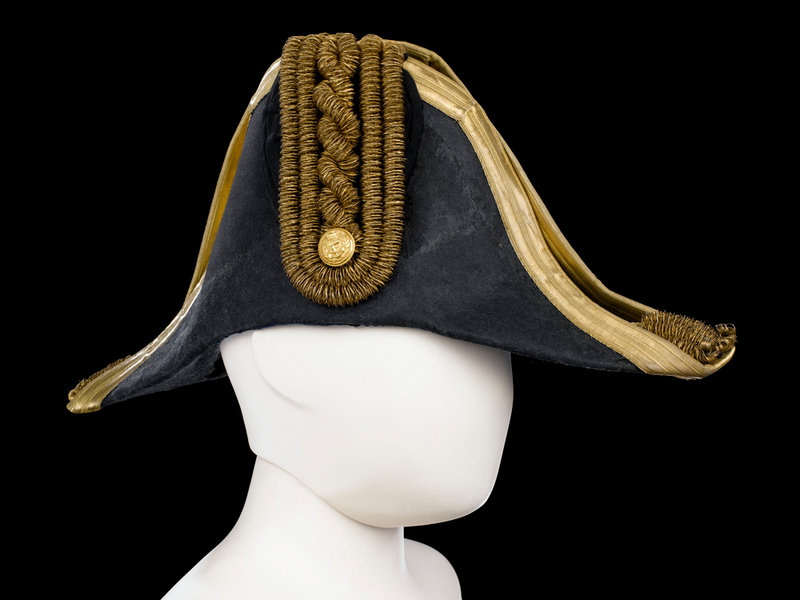
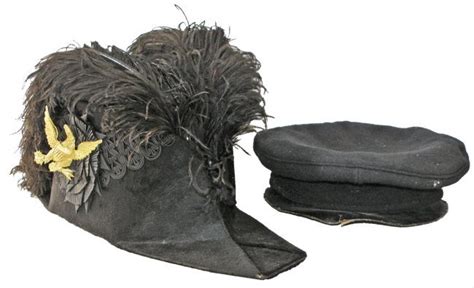
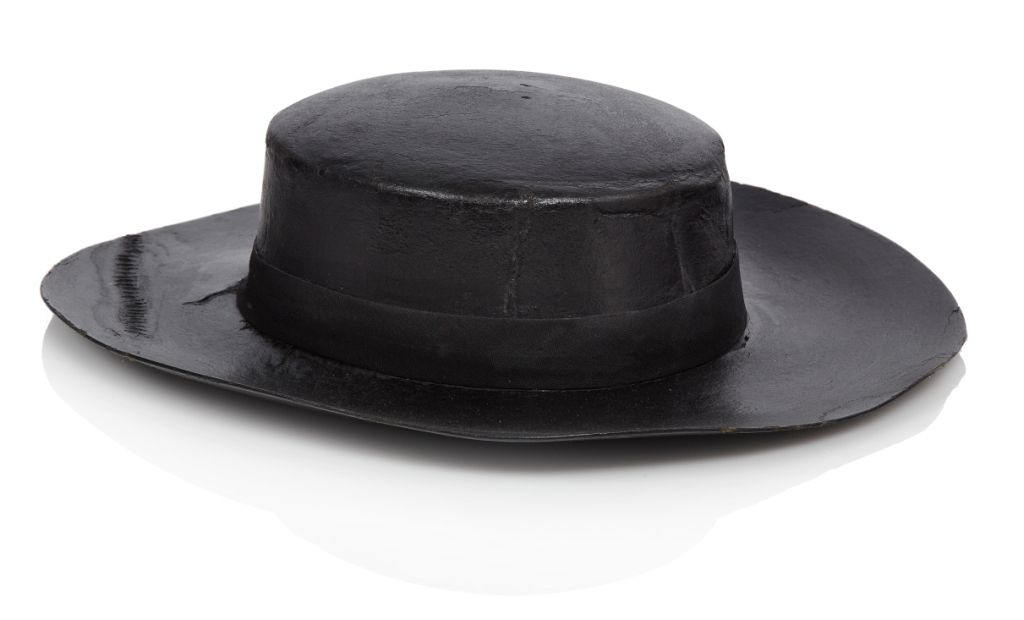
Anyway, last but not least, let’s talk about the hat!
First of all, there are a couple of interesting details regarding Ahab’s appearance in this chapter, which sort of upend my own vision of him. One, he is only now growing a beard, which is black and unkempt, and secondly he’s been wearing a hat of some sort this entire time! Well, that latter part isn’t entirely unreasonable, but somehow never entered into my own conception of the man.
For whatever reason, I always pictured him having a bit, white, bushy beard, not unlike a more grim and taciturn santa claus. It just seemed right somehow, I’m sure some parody in a cartoon or whatever used that design and it just stuck in my head long before I ever touched this book. But also, his unrelenting dedication and grimness seems to evoke the image of a more wild and aged man… though I can also see how this one works.
Indeed, if Ahab is trying to put forward a certain image of sanity, then of course he would keep shaving himself, and wear a proper hat at all times. He’s putting a show! Portraying the role of the serious and industrious and most of all perfectly sane whaling captain.

So, this chapter indicates, by shedding his hat and growing a beard, and banishing himself from belowdecks entirely, that he is finally gone off the deep end, for good and true. He is abandoning his mask of sanity, glowering at his crew to keep them in line, and finally lets go of his last bit of comfort: his hat!
After all, he is now living entirely on the deck. He is covered in dew, the sun roasts him throughout the day (remember, they’re in the south pacific). Without a hat, it’s going to be that much worse. In this very chapter, it’s also the only thing keeping the crew from telling whether he’s watching them or snoozing on his feet:
yet hidden beneath that slouching hat, they could never tell unerringly whether, for all this, his eyes were really closed at times; or whether he was still intently scanning them;
He’s giving it all up, the whole game, in pursuit of his one and only goal: finding Moby Dick. The monomania has truly conquered his soul, at last.
And how does he lose his hat? Why, in another ill omen, of course! The bird taking the hat is seen as a good omen, because the same thing happened to some Roman emperor… but in that case, the hat was recovered, while Ahab’s is dropped into the sea, ahead of the ship.
I don’t think I need to spell out what this means, it seems fairly plain on its face.
Man, this feels like another chapter you could write a whole book about on its own. There’s so much going on! Melville is firing on all cylinders as we come into the home stretch here. I read the whole thing aloud before writing this post, and it just sounds so good.
Chapters like this make me wish I was a bit more knowledgable about literary analysis, I’m not really up to the task. This is just my own thoughts on the matter, some vague musings really.
Until next time, shipmates!

 The Beige Moth
Hey Robin, thanks for this email!You’re an amazing writer and I really enjoyed reading your post. Anything come to mind for a new book to inspire your blog after you finish with Moby Dick?Or just start aga
LikeLiked by 1 person
Oh, I’ve had a few ideas, but I’d kind of like to start writing on more diverse topics than just diving into another book. Though it has been nice to have a definite endpoint for this whole thing. Something I still need to think about.
LikeLike
Maybe Fedallah is more shadow than substance: Ahab’s appropriation of Eastern philosophy as a tool for his very materialistic goal. Materialistic in the sense that he is translating ideas about man’s place in the universe into flesh and blood events. Americans seem to have a little problem with enacting idea(les) into actual events. Check the last paragraphs of The Great Gatsby for a much better explanation of this. What is ideal can remain pure. When linked to the material, the ideal becomes corrupt.
LikeLiked by 2 people