
Ahhh, another month come and gone, time really feels like it’s flying by lately.

Things are pretty good for me, in all honesty. My job just moved to some new offices, which are very nice. I have my own little cubicle now, which feels like a joke but it is a step up from the open plan layout we were in before. I’m even next to the front windows, so I can see everyone coming and going from the building.
I had been anticipating that move so much that it feels almost surreal to be on the other side of it now. This was a thing years in the making, but now it’s just… done. The commute is shorter, only one bus, but the timing is more annoying. The bus doesn’t come very often, and I have to cross a road without a sidewalk to catch it home. Kind of annoying! Anyway, let’s get into it.
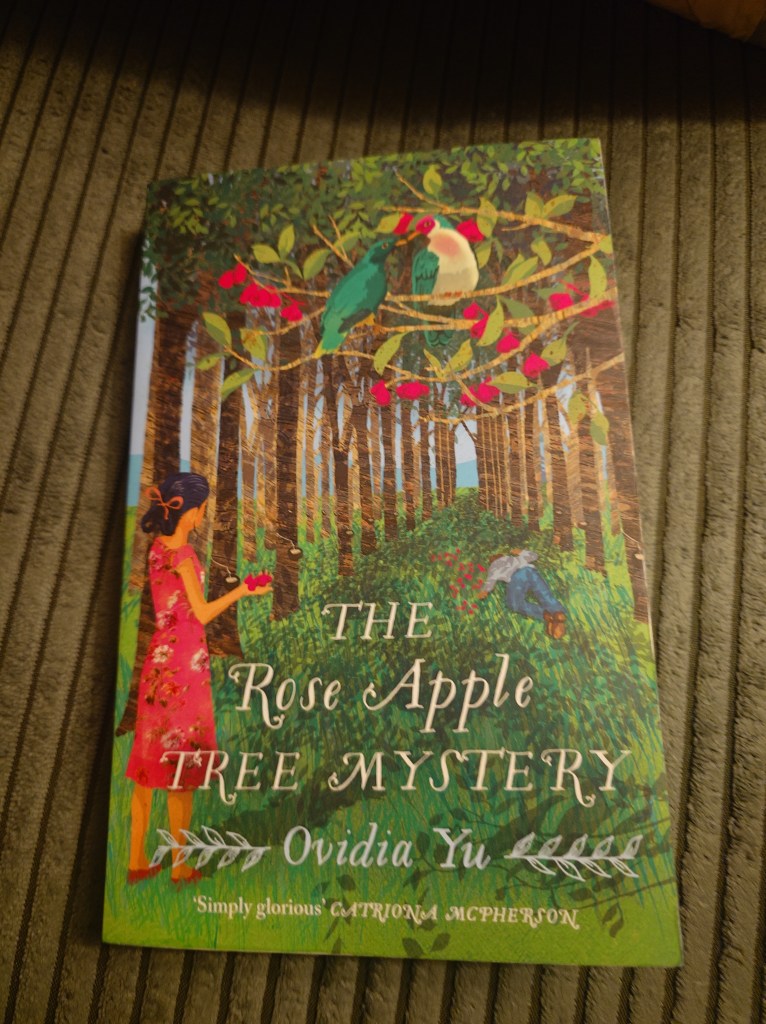
The Rose Apple Tree Mystery
The latest Su Lin book, for another couple months anyway, by Ovidia Yu.
This one was… very fun, but also very rough around the edges. I can’t say that I’ve ever even noticed poor editing of a book before, but there’s no other explanation for what’s going on here. Especially towards the end, the earlier parts seemed better put-together.
There are several places where it was obvious that paragraphs had been moved around without being subsequently cleaned up. For example: Su Lin learns some information, and then several pages later learns it again and reacts to it as if it were the first time. Or more directly, she responds to a question and then the asking of the question is placed afterwards.
It’s a shame, because the beginning is lovely, and it is an interesting mystery, though it feels like it falls once again into the pattern where the most obnoxious character is also the murderer.
I checked the acknowledgements in the back, and compared it to earlier books in the series. This one credited only a single editor, whereas the earlier ones often had a whole team, and this is a completely new name. Seems like trouble at the publisher, to me. Alas!

John Carter
Watched this movie last week for Blank Check, and it was… a singular experience.
It’s very rare that you watch something that was executed with plenty of talent and money behind it, but it’s still fumbled badly. This was directed by Andrew Stanton, a Pixar guy who also directed their big hits Finding Nemo and WALL-E. It was his first live-action directing job, a big swing at a dream he’d had since he was a child… and he missed.
It looks great, they shot on location in the desert (though not on Mars) and even the copious CG holds up pretty well. You cannot fault the artists working on this movie, the aliens and the fantastical technology all look great. And… many of the actors are doing good work as well, though sadly not the lead. Taylor Kitsch just wasn’t cut out for this sort of thing, although….
The real problem was the script. It’s a total mess. I don’t know how close it is to A Princess of Mars, the first in Edgar Rice Burroughs’ Barsoom saga, but it really fails to capture the feeling of an adventure serial that it was desperately grasping towards. The best thing you could say is that it’s certainly earnest, which is a plus in this day and age, but that’s about it.
The most famous blunder is placing almost an hour of screentime before our hero even gets to Mars, and making him intensely unlikable by hiding his trauma until a triumphant moment late in the film. He really comes across as an asshole who only cares about money for, oh, a good 2/3rds of the run time.
This is famous because it is exactly what Andrew Stanton himself did not do in Finding Nemo! That movie starts with the tragedy so you can at least understand why Marlin is acting the way that he is. The original plan was the same as in John Carter, slowly teasing it out over the course of the film, but test audiences hated it. Maybe this was a trick that Stanton really wanted to pull, and well… I guess he needs to keep trying, because he sure didn’t do it here.
When this movie came out, I remember a huge marketing push for it. TV ads, product tie-ins, all kinds of things. You’d see that weird alien dog everywhere for a while. But then it was released and immediately faded from public consciousness as if it had been a bad dream. Finally circling back to it was interesting… it wasn’t bad in the ways I expected, lacking the period-appropriate irony and bad CGI.
Almost like getting to go back in time and do something differently only to discover… no that would also be a bad decisions, just a different one.
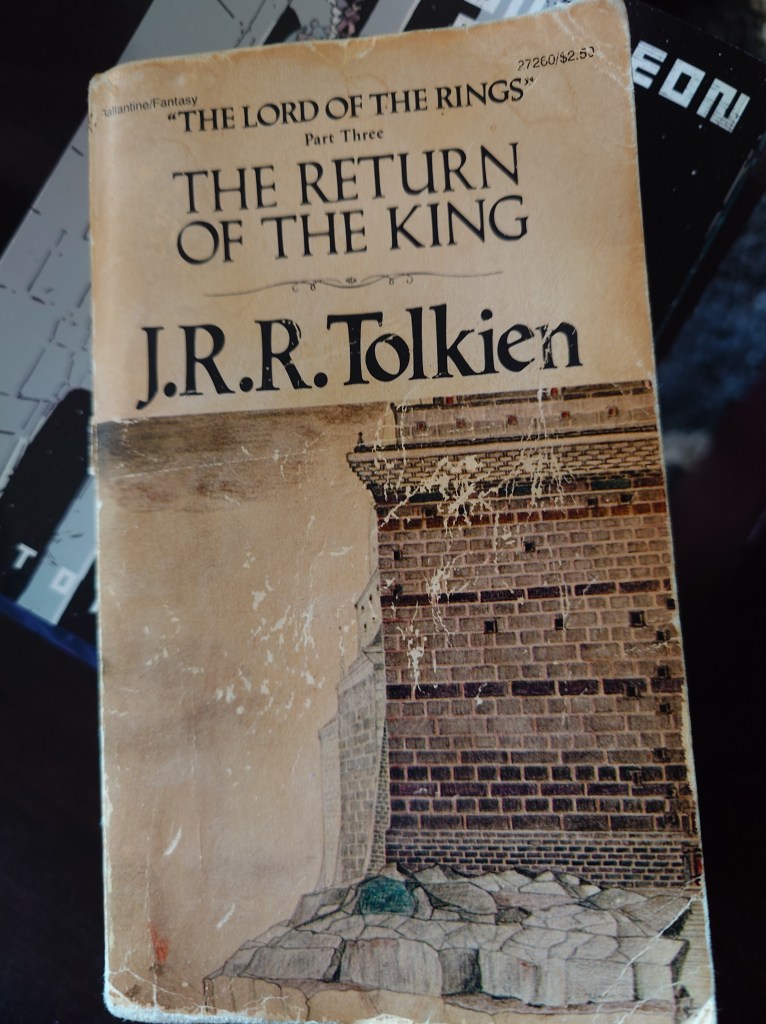
The Return of the King
Finished off Two Towers and moved on to this, the final entry in the trilogy!
So far, I’m enjoying this one a lot. This is a series that I am enjoying mostly with a scholarly detachment, it’s not something that’s nostalgic for me but it’s touched on many things that are. So looking at it and trying to figure out how all the pieces of it are working is very engaging.
Specifically, what other authors picked up and what they left alone. People try to create all kinds of elaborate history for their fantasy worlds, and invent languages, but they rarely have the sort of mythological and religious grounding that Tolkien’s actual work does. I certainly don’t agree with what he’s saying or implying through a lot of these books, but it’s grounded in a theory of the way the universe operates that is almost suffocatingly consistent.
There’s a lot of The Fisher King here, where the travails of rulers stand in for the realm itself. Theoden and therefore Rohan is stuck under the spell of an evil wizard until our heroes come and free him, thus allowing him to regain his glory and come to the aid of his allies. Gondor/Denethor is strong but has fallen into despondency and paranoia, only to be purified by the fire of war.
But it’s not just kings! There are many places that are ruled over by an individual who seems part of the land in a more or less literal way. Tom Bombadil, Treebeard, Shelob, Sauron himself with Mordor, and so on. The conflict is between methods of ruling and the perceived legitimacy of the rulers; that is, is it a “natural” and “well-appointed” ruler or someone who has come in and taken over.
Something that’s been really striking is the extent to which the books are prejudiced in favor of elves in all matters, forever. It’s not just that elves are “the good guys” in some abstract sense, they are the people closest to God and all things good and pure. The humans who are the most elf-y are the good ones, they’re High and the ones that are more purely human are Low, or Middling if they’re mixed. Like, there’s no beating around the bush with this stuff, it’s extremely straightforward and not shied away from.
There is no sense of… balance, I guess you’d say. In showing that all these fantasy races have their strengths and weaknesses but must come together to- NO! The elves are the best. They fought this war, but worse, several times over, ten thousand years ago. To the extent that there is any goodness in the other peoples of Middle Earth, it is the reflected glory of elves.
The sense of elves being arrogant is something added to fantasy later on by people getting annoyed at Tokien’s conception of elves. Which is kind of funny, if you think about it.
Anyway, the thing that makes it interesting and not just irritating, to me, is that these elves are also not just regular people. They’re like weird semi-divine beings. They don’t just live a long time, they live forever, unless killed by violence. They remember everything perfectly, in their long lives. This is something I think the Jackson films completely failed to get across, frankly.
The world feels like it’s in a post-apocalyptic state because it is, to the elves, the protagonists of this story. They already fought all their great battles, everyone is either leaving on boats to go to heaven or slowly going crazy hanging out in the woods. The days of glory are long over, it’s a great effort to even help the forces of good against evil, because it’s hard to care about anything anymore. Notably, the main people who do are Elrond (who is part human) and Galadriel, who has one of the elven rings of power; which she uses to alter the flow of time in Lothlorien so that they can maintain some sense of the glory of the past!
Anyway, that’s just my general musings, go listen to Shelved by Genre for in-depth analysis and context and whatnot.
The Ghost in the Shell
This is the new anime, not the movie or the TV show or the other TV show.
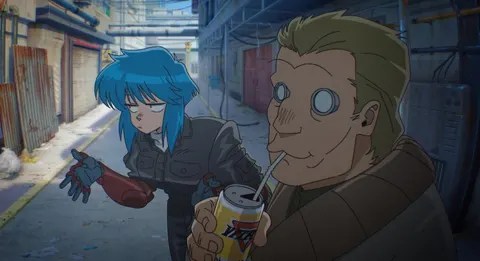
This one is part of a wave of like… throwback-styled anime that’s been simmering away for a while. It is faithfully adapting the manga series, which none of the other adaptations have even vaguely tried to do, not only in content but in art style as well. The mix of cartoony human faces and incredibly detailed electronic gear has finally been brought to life!
There’s only one episode out, but I thought it was pretty good. It moves very fast, with little exposition, which is mostly off-loaded to text boxes that only briefly appear on-screen. Leaves you feeling a bit unmoored in the end, about who these characters are or what the stakes of the story are.
I do see a potential problem where like… okay, when you’re reading a comic book, you can stop and stare and read through a whole block of text very carefully and think about what it means for the action going on around it. That is not true in anime. And Shirow Masamune is a master of putting huge blocks of text next to his intricately detailed artwork. I worry that things may get a bit too… muddy and disconnected, if we’re just left at sea because they’re aping the original too closely.
Anyway, as I mentioned this seems to me to be part and parcel with things like the recent new series’ for Urusei Yatsura and Ranma 1/2: ’80s style throwback anime, but animated to hell and back. Not merely being nostalgic, but going back and saying “well, we can do it right this time”, y’know? Probably started with Dragon Ball Z Kai, which was an attempt to just… do DBZ again, but better this time.
They’re currently planning on doing the same thing with One Piece, a trailer just dropped recently, which is funny because that anime and manga are still going.
The Ghost in the Shell does seem to be attempting to stick really close to the original art, in ways those other adaptations don’t. I honestly wish the One Piece one was closer, haha. It’s an interesting idea, and I hope it works out!
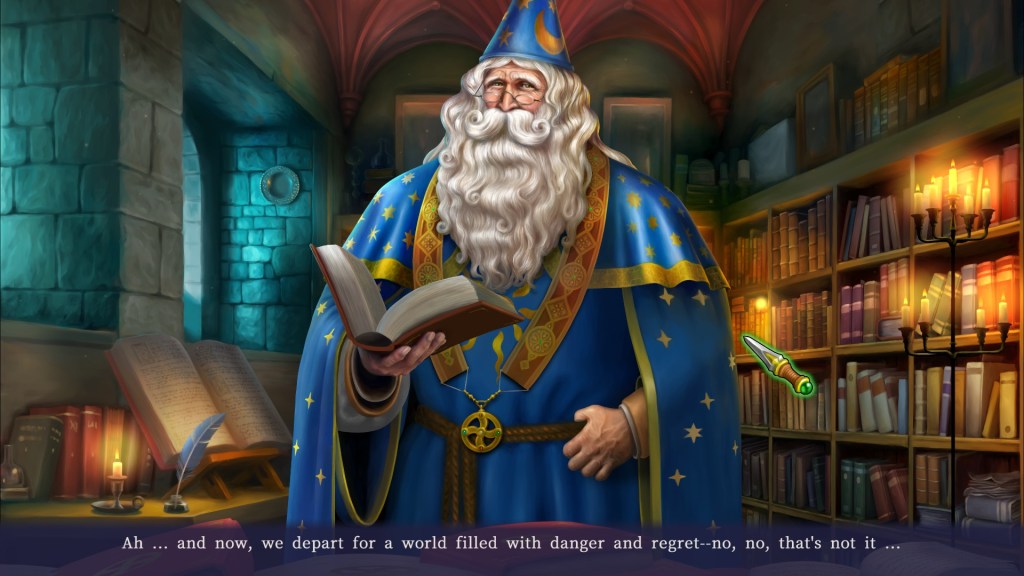


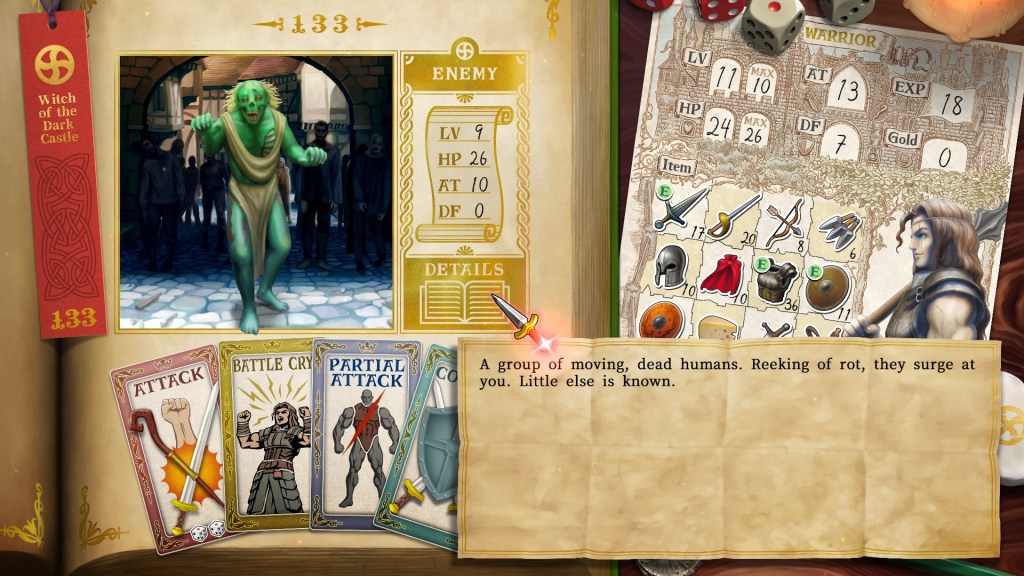

Veritas Tales: The Witch of the Dark Castle
This is a game that only came out a few days ago, but I’m enjoying it so much that I wanted to write about it here. And it is, in a way, a book, haha.
This is a game made by Yoshio Nishimura, a developer and artist formerly for Capcom and VanillaWare, companies both well-known for their excellent art, going way back. VanillaWare, in particular, has a reputation for extraordinarily high-quality 2D art for all of their games.
Yoshio decided, after being asked to come back to the office after COVID restrictions were lifted, to go off on his own and make his own game. He literally went to live up in the mountains in southwestern Japan, outside of Osaka, and just work on his game full time. I highly recommend the interview RPGSite did with him last week, it’s fascinating.
Anyway, what is this game? It’s basically an imitation of old fashioned game books, sort of a solo version of a tabletop RPG, where you had to track all your stats and inventory and read through the book choose-your-own-adventure style. Of course, this goes much more smoothly with a computer simulating everything, but there are charming efforts made to replicate the experience.
This game really feels like a different type of game from most RPGs on the market. It’s more about like… poking at this machine, the world that has been prepared, and trying to figure out all of its secrets. Now, this is a place you can get to with most RPGs, but modern ones certainly don’t encourage it, and it doesn’t tend to be very rewarding.
Not so here, you’ll find all sorts of neat little hidden paths and bits of obscure information if you keep going back and trying different things. I feel like I need to get my brain into a different mode when I play it, compared to something like, say, Octopath Traveler 0 or Nioh 3 or even Deltarune.
It’s almost like playing Crusader Kings or King of Dragon Pass, where you need to get your head into a totally different space to even make sense of things. Both from the game side and from the fictional side. It’s a sort of blank slate fantasy world, you have to get in there and figure out what’s possible and what’s happening, and also you need to use different tools.
There’s very little strategy to battle, it’s mostly just rolling 2D6 against your opponent, trying to get a higher number. It’s all about resource management, not only in the moment but over time. I just came to the decision to start over from the beginning because I simply didn’t have enough resources to continue forward. Knowledge about how things go is necessary to make good decisions! This is not a “fair” game; sometimes it asks you to flip a coin and if it’s tails, you just die. Sometimes you gotta flip it four or five times before you can move on! That’s just how it goes.
Hm… that does make me wish there was like a cheating mechanism, that’s certainly something you could do in the solo game books it’s imitating. You can bookmark as many scenes as you want, of course, and go back and forth any time, but you can’t just write in that you have 99 gold, or fudge a critical attack roll.
Oh right, what’s the game about? Well, you are a person who is visiting a wizard in a magical library, and he gives you a cool magical game book to play. You have a choice at the start between a mage and a warrior. The plot concerns a witch who has taken over a castle and turned most of the surrounding city into the undead, but there’s obviously some sort of deeper mystery to what’s really going on.
For one thing, in an interesting conceit, the titular witch raised the warrior protagonist as a child! Then suddenly sent them away one day. So part of your journey is to find her and figure out if it’s really her at all, and then… maybe join her, I guess!
I’m looking forward to playing more as soon as I finish writing this blog post, and really applying some elbow grease to figuring out the proper solutions to some of these side quests. I’m sure some of them involve the like dozen different magical items you can buy, which I didn’t even touch the first time….
It was hard to pick what to write about this month, I feel like I spent a couple weeks only watching bad movies one after another, and I didn’t want to be so negative. It’s very tempting to just write endlessly about things to hate, especially in this day and age, but it doesn’t feel satisfying, y’know. Too much negativity in the brain leaves you feeling down, some of it reflects back on you.
In general, I don’t want to come on here and just trash things. Even things I think are bad, I’m only gonna write about them if they’re bad in an interesting way.
Until next time, shipmates!

 The Beige Moth