
Well, it’s that time again!

Getting to it a little late this year, I’ve been busy lately. Have been back at work, and trying to figure out some logistics around improvements to my apartment. Still muddling through that, but I wanted to take some time and reflect on the year of games, as is my custom. Even though, like, I do not actually write about games at any other time of the year on this blog. And, indeed, have not updated at all for the past month or so!
I must apologize for that. I’ve been in a bit of a low mood, on and off, mostly because of a very frustrating project at work that has been dragging on for months longer than I expected it to. The less said about that, the better.
I will return and finish Moby Dick this year, it would be silly not to at this point, given I’m in the home stretch. It’s just… in hibernation… at the moment. Don’t you worry.
As usual, these are simply the games I played and most enjoyed throughout the year, presented in chronological order. Let’s get to it!
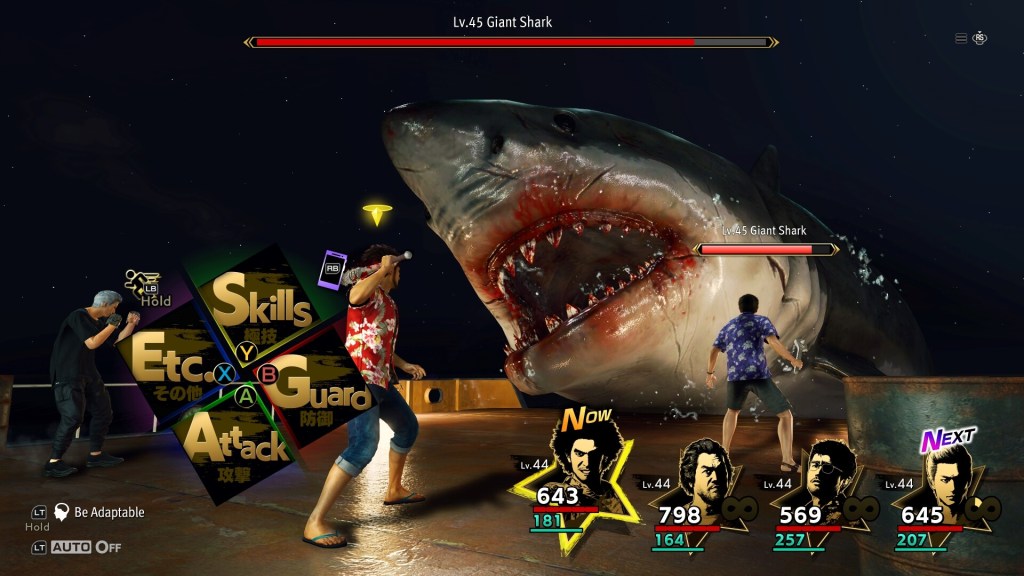
Like a Dragon: Infinite Wealth
It’s difficult to perfectly remember so far back as the beginning of this year, it feels like a lifetime ago. But, I do recall, vaguely, greatly enjoying this sprawling JRPG, though it does have some issues, and not the ones that usually dog this venerable and long-running series.
In general, this game is a solid improvement on the last game, Like a Dragon: Yakuza (aka Yakuza 7) in every imaginable way. At least, in terms of gameplay.
The combat is so much better it beggars belief, battles are not quick and engaging, without the sort of… looseness that plagued the last entry. No longer do you have to wait for player characters or enemies to slowly jog over to enemies, going around obstacles in the environment. Everything is smoothed out, and the classes are more varied and fun to play around with.
The minigames are also a lot of fun, though I still pine for the hostess club management one from 0 and Kiwami. In particular, the Kairosoft-style island resort management minigame is a ton of fun, you essentially get to build your own little hyper-detailed city block, like in the rest of the Yakuza games. Plus it’s an easy way to make a ton of cash.
Anyway, my main complaint about this game is very simple: the Kiryu sections don’t need to exist. The man already had a whole side-game about getting old and passing the torch and tying up loose ends, and he already had a great main-series sendoff in the last game! Let it go already!!
They’re also just, like, not as good as the Ichiban sections. You spend a lot of time just wandering around old locations, getting trivia and nostalgic reminders thrown at you. The actual plot in those segments is so thin it may not exist, and it does feel like it takes away from the drama over in Hawaii. Like, it reduces that one by having this side stuff going on that feels more “traditionally Yakuza”, y’know. It feels like the developers still don’t have confidence in their new characters and plot ideas, we still have to cling to the old familiar ones.
Well, hopefully the next one finally breaks out and introduces more new stuff. I’m excited to see what sort of setting they bring it. Hawaii was a lot of fun, very specific references from real life and whatnot. It was kind of thrilling to see that attention to detail applied to a place I’ve actually been, in real life. Surreal to visit an ABC Store in a video game, to say the least.

Unicorn Overlord
To my great shame, I never did finish this game, but I can still say it is excellent.
I have great antipathy for the tradition of real-time-with-pause RPGs, sort of pseudo-RTSes, in PC gaming, but this is how you properly combine real time and turn-based elements. Your units move around on the map in real time, and then when they enter combat, they have automated turn-based battles.
This allows for fun micro-managing of movement and positioning, using abilities and whatnot to keep your advantage, but also simplifies the elements of that enough that you can simply focus on the broad strokes of directing your units in combat. Because you can set everything up for combat ahead of time, in a really cool clockwork way. You give your units orders, like “if your turn comes up, and your allies are below 50% HP, cast a healing spell, otherwise, attack the enemy”. They play those out, and you win, or you don’t.
It feels like an evolution of Fire Emblem and hero-focused RTSes like Warcraft 3 or Dawn of War 2. There are no generic units (well, there are, but they’re optional), every units is made up of several characters. It packs the JRPG experience, in a neat little package, inside an RTS, in a way that’s extremely satisfying to play.
Also the art is just gorgeous, and not horny in a somewhat embarrassing way like Dragon’s Crown was. I only wish Vanillaware didn’t have an aversion to the personal computer, I can only imagine what kinds of mods people would be making for this!
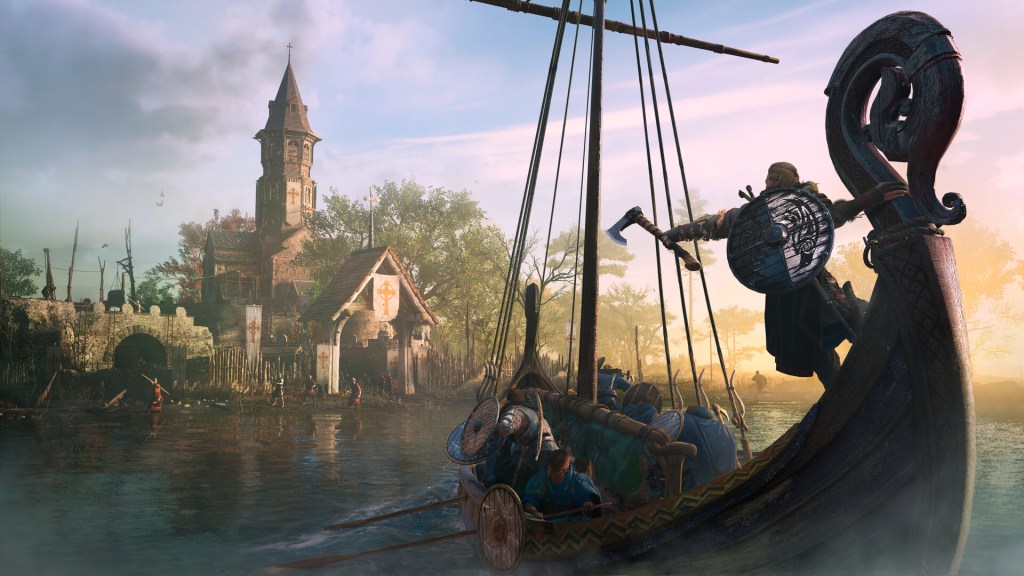
Assassin’s Creed Valhalla
This was a game I picked up on a lark. It had been a few years since I last played one of these, so I figured I may as well check it out.
Many people have lamented the series’ fall to RPG mechanics, but obviously that’s more of a positive for me. None of the other games after the AC2 trilogy really lived up to those games, so they may as well do something different, I figured. Origins was a lot of fun, and Valhalla is even more of an RPG than that one was.
It really does help to be interested in history when you play these games. Obviously they play fast and loose with things, but it’s just interesting to see any interpretation of an era that doesn’t get a lot of attention, like this one.
I had a ton of fun running around medieval England, climbing castles and old Roman ruins and whatnot, fighting witches in bogs, exploring secret caverns, et cetera. But eventually, I got tired of that trademark Ubisoft looseness. Nothing quite feels real in those games, not quite solid. You glide over things, move your sword around, move your hand vaguely near things to interact.
To some extent, they leave things so open, and there’s so little friction, that it’s very easy to lose focus and get bored, if you stop playing for even a day and try to come back. That’s what happened to me, I got out of the habit of playing it, and then simply didn’t get back to it. Finished about half the game, and I was being extremely completionist, as is my wont in those sorts of games. Maybe someday I’ll return, when I’m in the right mood.
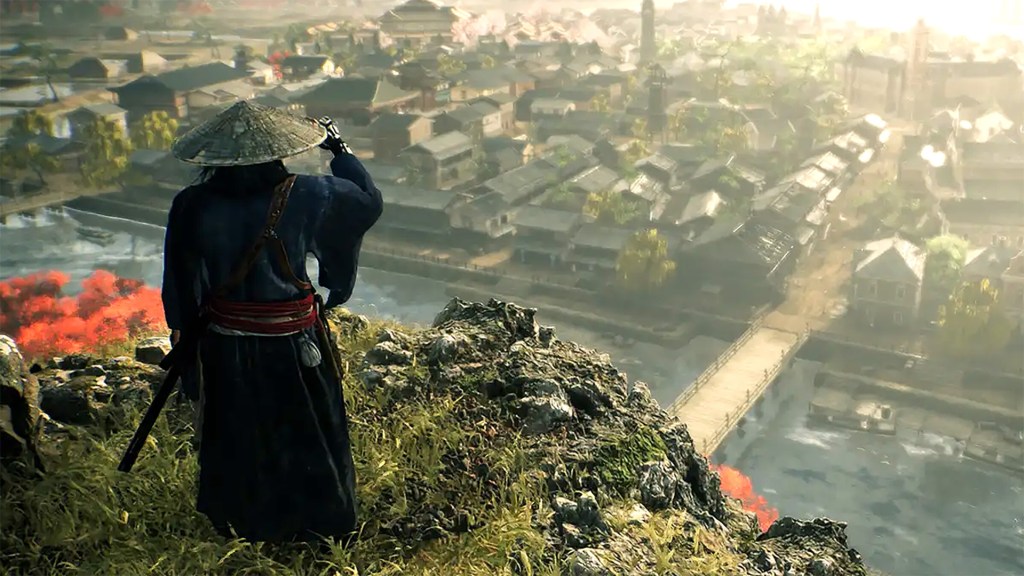
Rise of the Ronin
Another year, another Team Ninja game. I’m still pining for a true sequel to Nioh 2, and this is close… but not quite there.
The combat is incredible. A ton of variety of fighting styles and weapons, feels super fluid and responsive, it’s great fun.
The problem is… it’s an open world game, and worse it’s going for historical realism. Which is to say: the enemies are kinda boring. There are requisite “big” enemies, but they don’t show up very often, and are also very repetitive. The boss encounters are few and far between, and also feel pretty generic, most of the time.
It’s just lacking a certain hook, though it does literally have a grappling hook you can use to traverse terrain. It plays at openness, but compared to other open world games it falls far short. For every obstacle, the developers designed one way to tackle it, and by god you’re going to do it that way.
So, I suppose, it ends up feeling more like a 3D platformer, a collection of challenges of platforming and combat loosely tied together. It just got too repetitive for me to continue, at a certain point. Which never happened to me in the Nioh games.
It was just… a bit too plain, I guess. Lacking any supernatural elements whatsoever, and locking down your RPG options in keeping with historical realism, it felt like a weird compromise. Not quite a Nioh mission structure, but felt like it should have that. In fact, it literally does have separate missions you go on, at some points, where you pick a historical person to assist you. But those choices are so restricted, it hardly feels meaningful.
I really wanted to like this one more! At least it was fun designing meiji era outfits to wear.
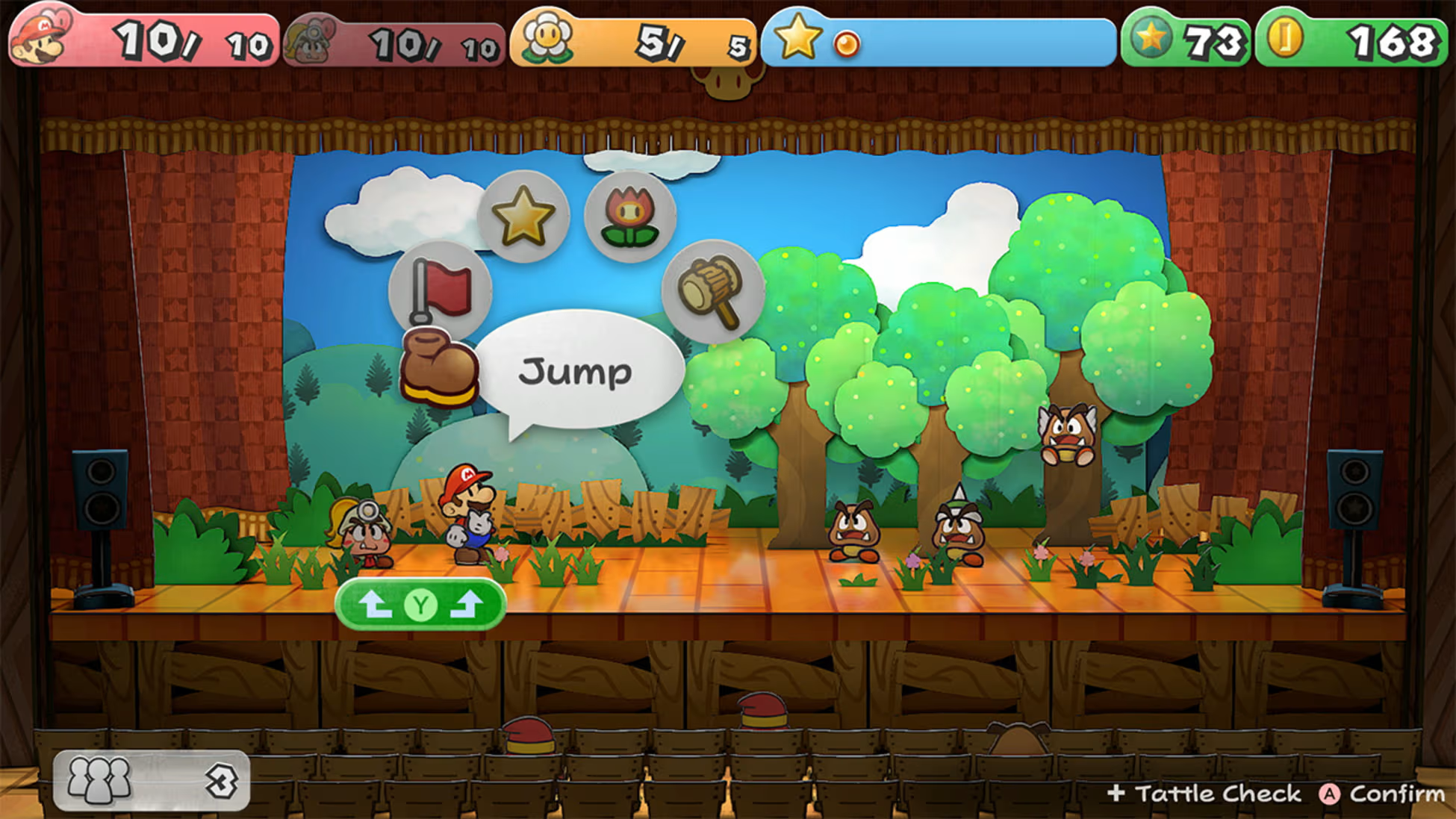
Paper Mario: The Thousand-Year Door
Another nostalgic remake for me. I love this game deeply, and it really holds up in terms of humor and gameplay, but it wasn’t quite the transcendant experience I had with Super Mario RPG last year.
It’s simply an extremely good game. There’s nothing I can say about this that hasn’t been said in a thousand other places. I was a little wary about the remake ruining the aesthetic of the original, but they did a great job with it. Adding more of a paper-y sheen, without compromising the old look of things. It’s very faithful.
But yeah, it’s a great game. Very funny, fun combat, drags a little bit with some of the later game areas. Oh also, the sidequests are like… all jokes about the nature of video game sidequests. They exist to waste your time, in a funny way. You can ignore most of them… but watch out! There is one that gives you a party member, and another that unlocks an extremely important feature.
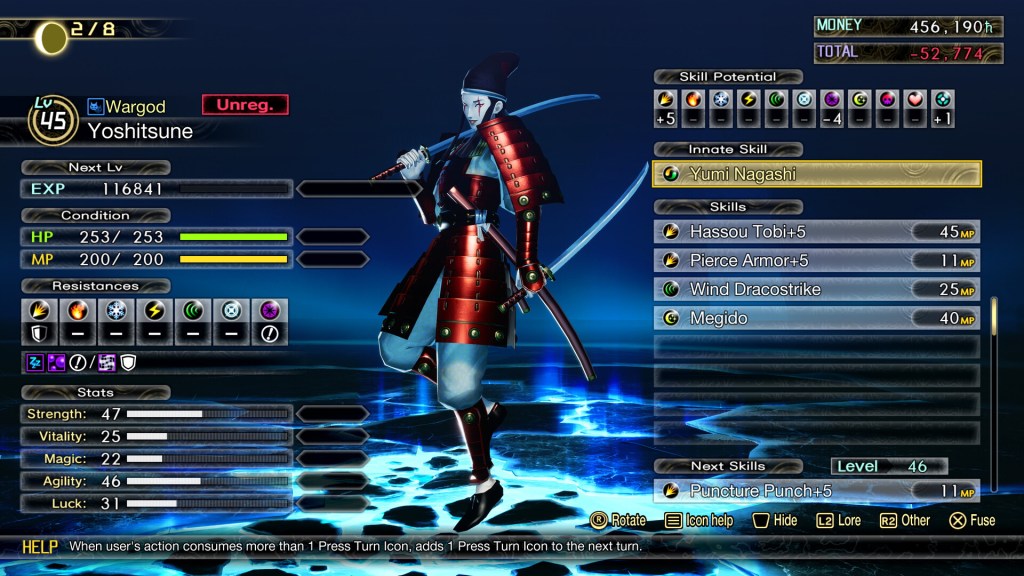
Shin Megami Tensei V Vengeance
A re-release of a previous game, in typical Atlus style, that improves it in every way. The added character isn’t even annoying this time, unlike Persona 3 and 4.
In the initial release, I stalled out hard on SMTV. The performance on the switch was just godawful, and the things I heard about the plot from a friend were not encouraging either. I felt bad about it, but in general the game felt like a step down from IV, so I wasn’t too distressed.
This one, though? It’s great. Still not quite on the level of IV and IV Apocalypse, those are real classics, but this brings it up more to the level of quality I expect from Atlus. The game now feels appropriately fast and smooth and snappy, combat is a breeze, and super fun to engage with, especially in the later game fights, where you really have to scramble to survive.
The new environment, a whole new region, is also a real standout. Incorporating more surreal imagery, it brings to life the idea of traversing an altered version of Tokyo, not one that’s merely post-apocalyptic.
I played through both the original game’s storyline, and the new one. The added one is a vast improvement, honestly. It has, like, actual characters who you talk to regularly, and who change over time. Things make a lot more sense, and it has a more traditional morality system, where the effects of your actions are hidden until the end.
There are some nits to pick, I still don’t like the half-measure of the high school stuff, and in general the conceit of the miraculous un-destroyed Tokyo is just… a little lame. Especially after IV did so many interesting things with that idea. I also felt the reduced number of monsters and skills, not having the gun element was a real letdown, and some of the platforming to get hidden items is really maddening (though, again, not as annoying as in the original release).
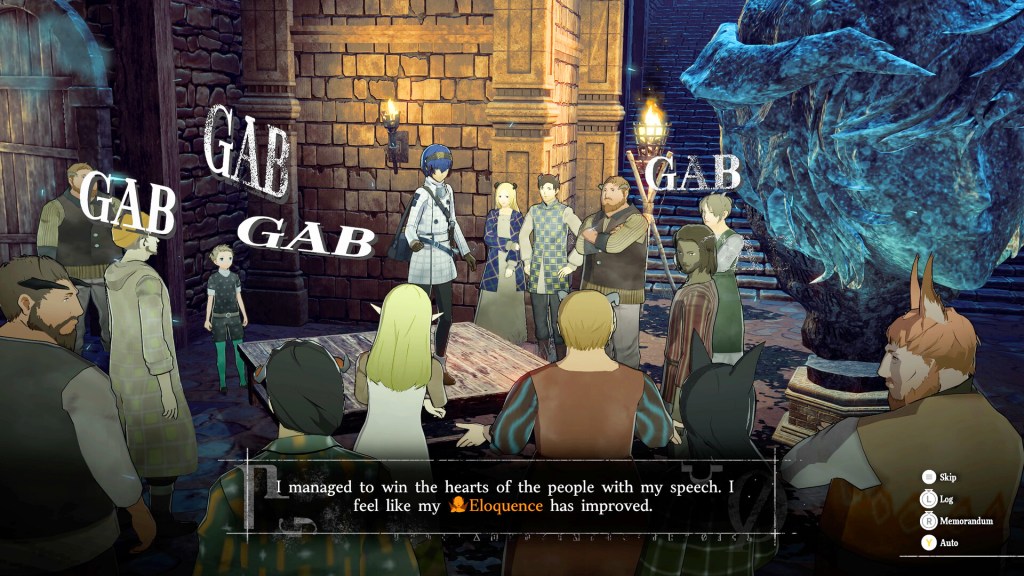
Metaphor: ReFantazio
The big one for this year. Atlus’ major release. I thought it was okay.
Now, don’t get me wrong, I think they did an incredible job evolving the systems of the Persona series, it has a wonderful art style, and it has a pretty engaging plot. But overall, it feels like it doesn’t go far enough, and some of the compromises in the art and concepts leave me a bit cold.
Also, the plot is engaging, but real dumb, and very poorly paced. Things will be trundling along in a certain direction for hours and hours, and then in the course of ten minutes there are like three or four bizarre plot turns and now you’re just as sedately moving on in a completely different direction. It’s quite strange.
You can tell it’s the same writing team as the Persona games. There is a certain… reluctance to take the idea of a fantasy world seriously. To approach the genre under its own terms, rather than straining to interpret things through a more modern and realis lens.
Also, on the gameplay side, I just don’t think the calendar system works here. This is a game trying to combine Persona and Etrian Odyssey, and it leans way too far on the Persona side of things. It feels jarringly out of place to have this strict time limit when you’re also doing regular JRPG things, like taking on sidequests, or Persona things like hanging out with characters.
They did not do enough work to meld the ideas. But also, I will admit I still just Do Not Like the whole life management layer of this game. They have smoothed things out immensely, no need for a guide it’s very easy to max everything out in time for the endgame. But still, it just feels so… unnecessary.
It reminds me a bit of Like a Dragon/Yakuza 7 in that way, where it’s trying to keep a foot in both worlds and so feels… unsteady. It’s very close to being great, but isn’t quite there.
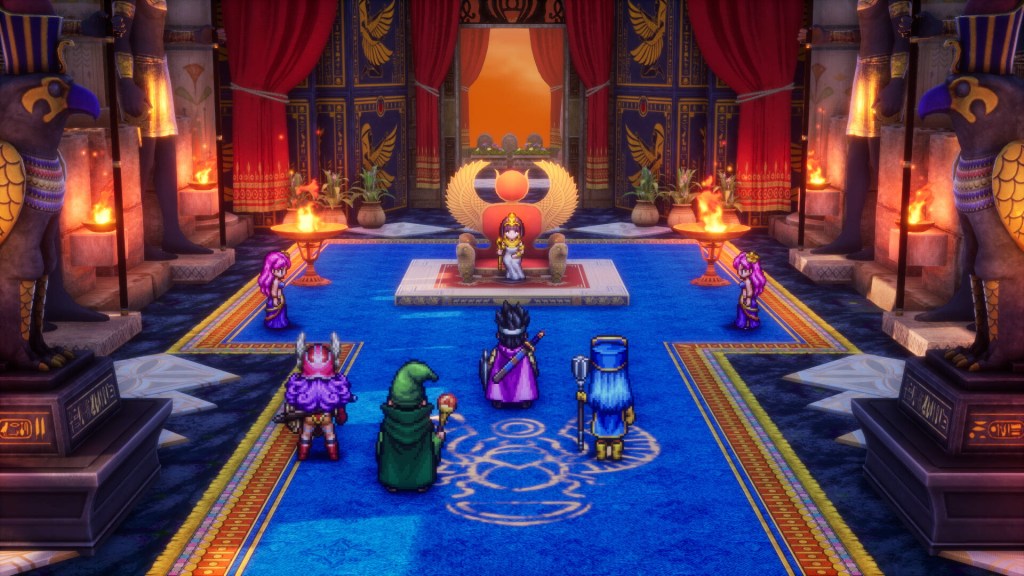
Dragon Quest III HD-2D Remake
This was a fun one, I do love these HD-2D games.
Dragon Quest 3 is great, and they did a great job reimagining the whole world and adding new QoL features and whatnot. I hope they continue this trend, maybe give one o’ those SNES Final Fantasies this treatment.
But I mostly wanted to include this to talk about something I realized while playing: this game has the same basic structure as a modern open-world RPG. You have the tutorial area, which is small and cut off, and then you get let out into the open world, and can go wherever and engage in little quests as they come up. You get things that allow you to access more places, but mostly you just explore where you can and naturally get stronger as you go.
I’d love to read some scholarly work, some centuries from now, about the cross-cutting influences of western and Japanese RPGs. I think there’s been a lot more than people realize.
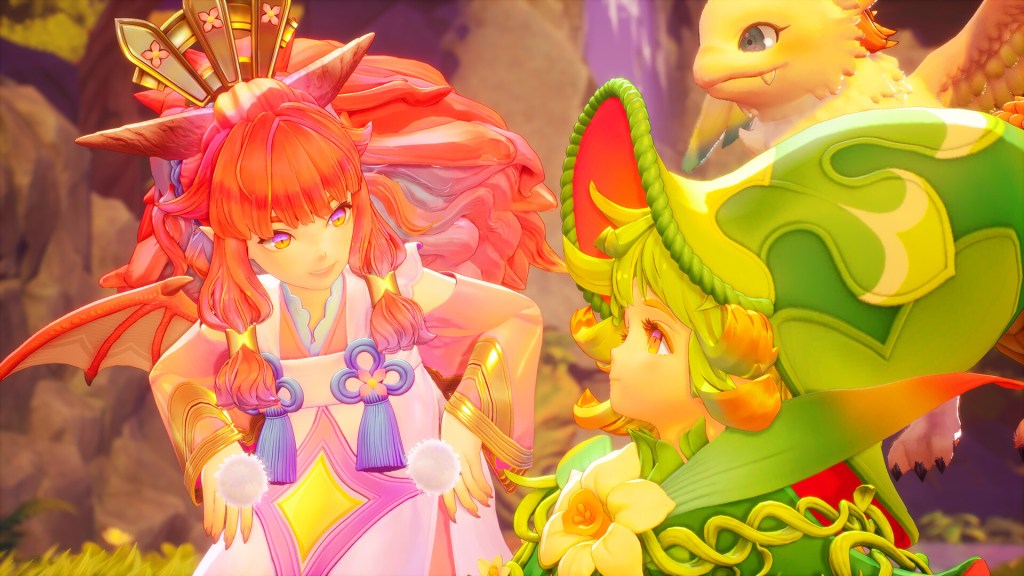
Visions of Mana
Ah… another game I really, really wanted to like more than I do.
The Mana series is one of my favorites. It’s an amazing thing that we actually got a new entry, after almost two decades. Apparently that remake of Trials and the port of Legend of Mana did decently for Square-Enix.
This game, though… is very odd. It’s half stuck in the past, with all normal enemies and most bosses simply plucked from older titles and lightly updated. And it has some very ambitious and interesting new ideas, like the vast array of classes available to all five playable characters.
But it feels… half-baked. It is like a direct sequel to Legend of Mana, but has none of that game’s gonzo creativity in its world or characters. It is the most generic, boring-ass JRPG I’ve experienced in a game so modern. It feels so much more bland than the plot of Trials of Mana. For as flat as those characters were, at least they had motivation that made sense, and felt like part of the world they inhabited.
The combat is fun, but that is the only part of the game that feels good to play. Exploration feels like a bad 3D platformer. The controls for running around and jumping feel absolutely godawful. You lose all momentum when you jump, and while I eventually got used to that, it never felt good. The menus for equipping and managing your characters are really fiddly and annoying to deal with.
It’s such a shame, it has some really nice aesthetics, they nailed that part of it, but overall it’s just… a waste. It feels so hollow. This game feels like a contractual obligation, like they cranked out the tenth Mana sequel in as many years, even though that’s not the case. Perhaps this has something to do with the developer shutting down immediately on release of this game, who could say.
In the end, it just made me want to play the Trials of Mana remake again, which is what I’m doing right now! It’s so much more fun. Apparently that team, for whatever reason, didn’t work on this game at all, but instead developed the Romancing SaGa 2 remake. Perhaps I’ll check that out later this year.
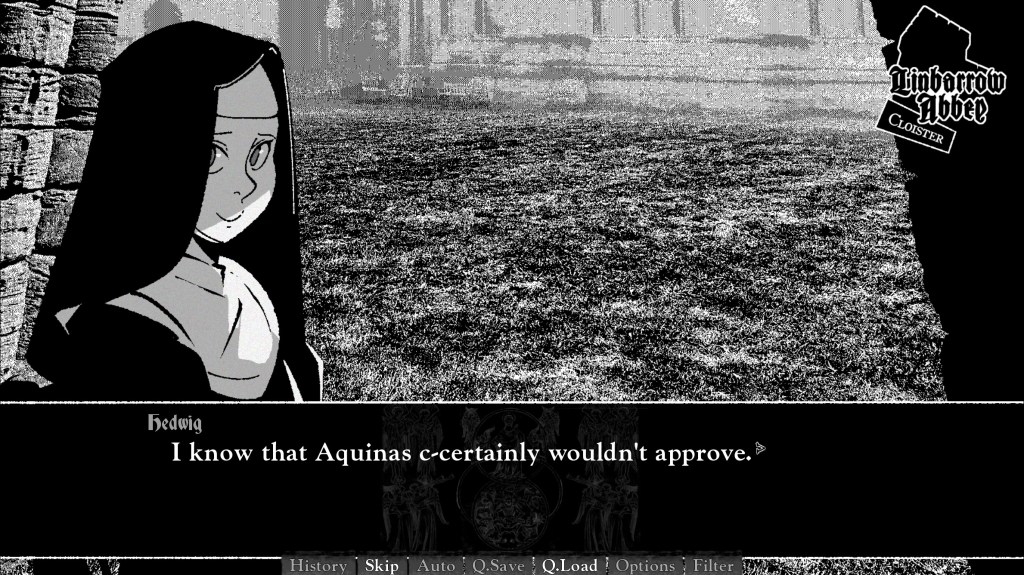
Misericorde Volume Two: White Wool and Snow
Comin’ in just under the wire, released on December 30th, 2024, is the second volume of Misericorde, that visual novel about nuns in 15th century England.
Huh, I just realized I have two completely unrelated games set in medieval England on my list. One is a gigantic release from one of the largest developers in the world, and the other is a nearly solo-dev project with no gameplay at all. And the latter is the one that made a far bigger impact on me, funny how that works.
This game is fucking great, and I cannot really explain why without spoiling it, which I’m not going to do. Suffice it to say: there’s even more mysteries, and a deepening of mysteries that seemed to be answered. It didn’t leave me wanting at all, and only made me more interested to see where this series is going.
It reminds me of nothing more than Umineko in its depth and complexity. There are more meta shennanigans going on in this part, more supernatural rumbles. In some ways, it’s a reverse of that game’s dynamics, where the supernatural is what the characters believe in, and it’s up to the reader to try and suss out a more grounded explanation of events.
I would say this part was not as spooky as the first one, it didn’t leave me literally afraid of the dark, but it was more impactful. There are some images from near the end that I keep going back to, just to see them and fully absorb and process them. They’re so incredibly good.
This one also does an incredibly job of like… shifting between different moods in jarring and very effective ways. It really feels like you’re in Hedwig’s head, going along with her as she experiences terror and love and mystery. Truly incredible stuff.
I devoured this game in basically three sittings, finishing it on the 1st of January. That’s just how engaging it is. Don’t let it pass you by!
Well, that’s it for me. I dabbled in a few other things, like Diablo IV and that new Dragon Age and an old Ys game, but I didn’t put enough time into any of those to come to any solid conclusions about ’em. Except that I do not, in fact, like Diablo IV very much.
Y’know, I was almost afraid to buy that game, as if I’d be betraying my morals by supporting Blizzard or my devotion to my beloved Diablo 3. But no, it’s simply not as good, I was right in my initial impressions.
This was a year where I was pining for games to be better than they are. But I know that’s partly my fault, for clinging to the familiar instead of exploring more new, independent releases. I may try to avoid big AAA releases completely in the combing year, I think that would be nice.
If I have a goal, it would be to catch up on the visual novels I’ve left unread for all this time. I’ve got House in Fata Morgana, I’ve got Paranormasight, I’ve got Tsukihime, Ciconia, the Nonary games, The Silver Case, and more. It would certainly be more intellectually engaging than playing through Nioh 2 for the tenth time, I suppose.
Well, here’s to another year! Otherwise, I’ve been doing alright, coming out of my recent funk. Had a break over the holidays that was very refreshing. Hopefully the next break in posts will be much shorter.


 The Beige Moth