
Where does the time go?
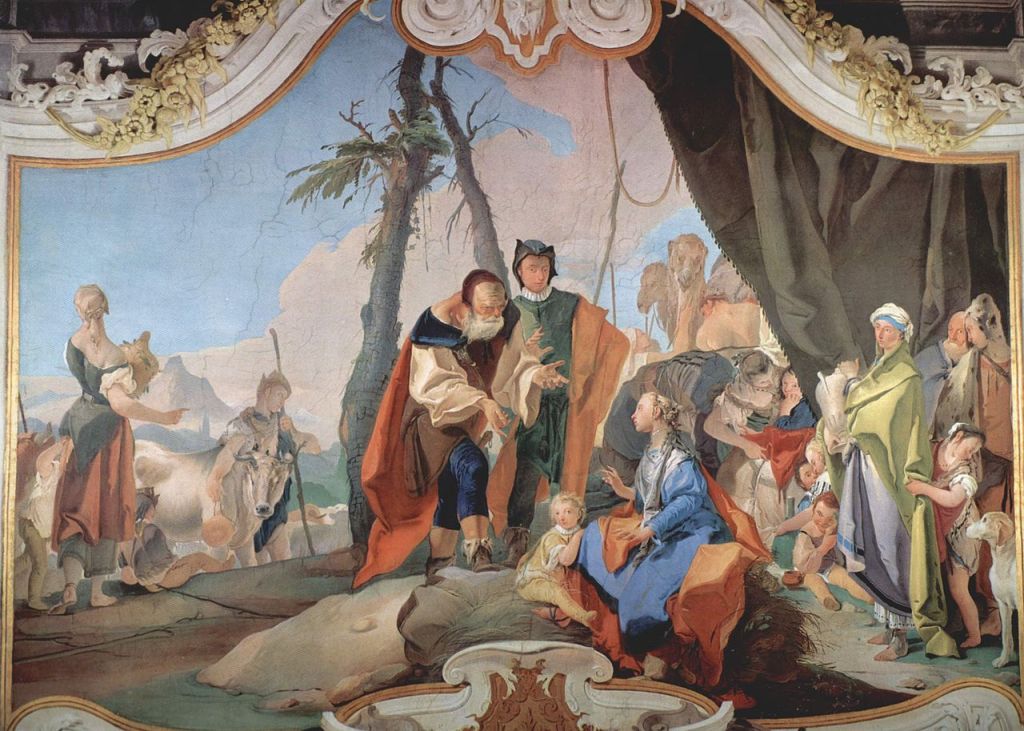
I can’t believe it’s late November already. Well, I suppose the time around the election was a bit warped, to my perception, but still. I feel like I’ve hardly had time to catch my breath lately, one thing or another going on. But this weekend, I had some time to myself, got a little caught up on some other reading, and on relaxation. So, I find myself once again in a mood to reflect upon some proper lit’rature. Let’s get to it.
Summary
The next day, the Pequod is finally back on track, flying over the waves as if nothing had happened, when she comes across another whaler, the Rachel. The Old Manxman immediately judges the ship as a bearer of bad news.
Ahab asks his customary question about the White Whale, and the captain of the Rachel answers in the affirmative, they saw him just yesterday, and asks in return if the Pequod has spotted a drifting whaleboat? Before Ahab can ask follow-ups or get in his boat to visit the other ship, the other captain is already in his boat and heading over to the Pequod, where he practically leaps aboard and begins begging his case.
It turns out that Captain Gardiner, for that is his name, sent three of his whaling boats out to attack a herd of whales, like the one the Pequod encountered previously. While they were out quite a ways, the ship descried Moby Dick himself, and sent the remaining boat out after him. The watcher on the masthead saw this boat harpoon that famous whale, and then disappear over the horizon, in the opposite direction as the other boats, still hunting among the herd.
The Rachel had no choice but to wait for the other boats to come back before setting off in search of the missing one, and they had thus far had no luck in locating it. This is in spite of making extraordinary efforts, lighting fires at night and sending out boats searching by day. Stubb wonders at this extravagance, but it turns out the missing boat contained the twelve-year-old son of Gardiner.
The fellow Nantucketer begs Ahab’s help with the search, offering to charter his boat for two days in order to double their searching radius, running parallel courses. But Ahab remains firm, and sends Gardiner back empty-handed, to continue his search.
Anaylsis
Hoo boy, we’re really getting close to the end of this book! I know I’ve been saying that for a while, but it sunk in more deeply with this reading, in my mind. It’s no longer a looming threat, the titular whale is practically in Ahab’s sights. Also, when I was going to this week’s reading, I saw that there are only a handful of chatpers left, less than ten.
Here we have another challenge for Ahab’s inhumanity and madness. Another peer, walking up and giving him a perfectly good reason to give up his mad quest. But alas, it seems that this only strengthens Ahab’s determination.
The Cracked Mirror
What is Ahab confronted with in this chapter but his own quest? Someone forgoing their fiduciary duty, indeed offering to throw more money away in pursuit of their own goal. Captain Gardiner, even more than Captain Boomer and his missing leg, is here to throw Ahab’s own madness back in his face, and expose it for what it truly is.
Consider one of the big revelations of this chapter, though isn’t underlined and bolded:
Do to me as you would have me do to you in the like case. For you too have a boy, Captain Ahab—though but a child, and nestling safely at home now—a child of your old age too—Yes, yes, you relent; […].
Ahab himself has a son! Not only a wife, but a young son, waiting for him back in Nantucket, even at his old age. This throws a lot of things we’ve seen into a different light, does it not? Ahab’s mad conviction in his quest, in the face of everything, as well as his bonding with the youngest member of the crew.
Perhaps he was softening, but recent events have crystallized his madness into a diamond-hard core. It has been blown up from a petty feud between man and animal into a cosmic battle between fate and the soul of man. In some twisted way, Ahab is doing this for his son. He would see himself avenged, and thus avenge his family as well.
That’s why he must relentlessly make this bigger than himself. It’s not just about his own satisfaction, that has long since ceased to be a sufficient motivator. He’s made a pact with the forces of nature, he’s deemed himself a demi-god, and he’s going to leave his legacy in the form of a dead whale, rather than a monument or a pile of cash.
A Biblical Tragedy
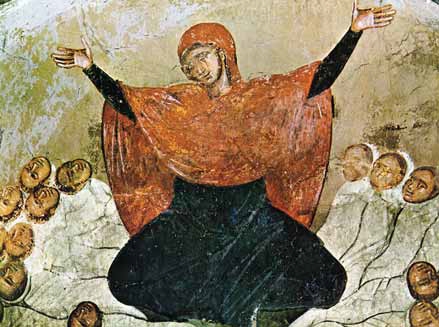
The Rachel is clearly named after Rachel, the figure from the Bible, specifically the book of Genesis. She was the second, and favorite, of Jacob’s wives, and bore him two sons, who would go on to be the founders of two of the twelve tribes of Israel.
One of Rachel’s children was Joseph, of Technicolor Dream Coat fame. But, of course, all that business happened after her death, as she died giving birth to Benjamin, when Joseph was only a few years old. She is primarily known as a symbol of mourning for and protection of children, symbolising a grief for the future.
It’s easy to connect the dots here. Gardiner brought his son on board hoping to forge the lad into a proper whaleman, under his direct tutelage. Most other captains send their sons off to other boats, so as not to give a whiff of favoritism, but that was not the way he did things.
In the end, it brought him grief, as is the way with the fishery, as Ishmael has reminded us countless times.
But by her still halting course and winding, woeful way, you plainly saw that this ship that so wept with spray, still remained without comfort. She was Rachel, weeping for her children, because they were not.
This deeply familiar tragedy stands in start contrast to Ahab, the captain as well as the biblical figure. His tragedy dwells more on political and religious grounds, feuding with various prophets, before dying to a random accident, and facing the wrath of god only in post-mortem indignity. The dogs did lick his blood.
Building in the Ellipses
It struck me, reading this chapter, how this whole book is a perfect example of speculative literature, perhaps in the most literal sense.
To borrow some contemporary parlance, Ishmael is world-building around Ahab. Think of it: Ishmael was a common sailor on the ship. All he knew what the strange bits and pieces that were visible to him, the public speeches and little bits of gossip he got from his superstitious crewmates. All the rest of this drama is built in those blank spaces left behind.
Ahab’s grim determination, his self-image, the nature of his obsessions, all of that is as hidden from Ishmael in truth as was the convolutions of Moby Dick’s own internal monologue.
But let’s take one step further back: this was Herman Melville, writing an epic to suit the vocation that he only briefly experienced himself. This novel was famously sparked by a real story, the sinking of the whaling ship Essex at the hands of Mocha Dick in the south seas. Melville himself is writing all of this grand Shakespearean and Biblical tragedy and drama in the places where nobody knows what happens.
The empty tombs of New Bedford. The families left behind when a whaling boat is towed beyond the horizon and lost forever. What was the truth? What grand dramas were spun by these living demigods, undertaking such impossible tasks as the slaying of sea monsters for the sake of a bit of money in their pockets?
What is left behind in their wake… is Old Ishmael, the author of this fictional tome. And what Ishmael thinks, well, that’s what we’re seeing on these pages.
Ahh, this was a good one. There’s some real meaty stuff here, I only scratched the surface. It’s been too long since I sat down and read the story of Rachel, I didn’t really flesh that one out as much as I’d like, but I think you get the gist.
I feel like I need to go back and read more of my own early writing on this book, make sure I can tie up all the loose ends and thematic ideas before running out of chapters. It’s been so long, and I’ve gone through a lot of life changes, though my fundamental reading and philosophy remain largely unchanged.
Until next time, shipmates!

 The Beige Moth
Hah! So you’re not even at the end and you need to go back to the beginning. You are indeed a “fast fish. “ Catching the meaning of this book is a life time task.
LikeLiked by 2 people
if mentioning a son pushed ahab even harder into ignoring the captain and pursuing moby dick, might that mean ahab’s son is not his son because of the injuries sustained from moby dick?
could this be another one of ahab’s frustrations?
LikeLike
speaking of blank spaces, does anyone know of a blog on Henry James’ The Golden Bowl, analogous to this one? it’s difficult to fully parse and appreciate its psychology on a one time read.
LikeLike
I’ve been reading Moby Dick for the first time and these posts have been life-saving company! It’s been a joy to follow along with the analysis. I’ve finally got to chapter 128 so I’ll be finishing soon, but I look forward to coming back later to hear your take on the final chapters! Thanks for all the care that goes into these posts.
Cheers!
LikeLiked by 1 person
Started reading Moby Dick a while ago and found one of your blog posts when researching some matter about the book. I very much enjoyed your thoughts on the book but decided not to read anymore to experience it without too many hints of what would happen (aside from the book’s own rather blunt foreshadowing). Now, that I’ve finished it I’ll certainly enjoy reading this project in full. It is wild that this project has been going on for so many years.
LikeLike
Now that I’m reading these posts (and thus, in a way, re-reading Moby-Dick), one thought struck me.
“Yet the grey Manxman—the oldest mariner of all—declared that the wild thrilling sounds that were heard, were the voices of newly drowned men in the sea.” (from Ch. 126: The Life-Buoy).
Maybe the wailing heard two chapters ago was the crew of the missing whaling boat? Alive or perished? Old Ishmael doesn’t concider the possibility in his writing, but then again, he’s presenting the events and thoughts in chronological order – wailing was heard then and taken as an ill omen, before they knew there was another ship nearby.
LikeLike