
Let’s keep this train a-rollin’.

I apologize for being a bit late this week, things were busier at work and I’ve been a bit stressed over my upcoming move. I’m really workin’ on it in earnest now, getting things organized, packing up all my books and video games and movies, etc etc. A lot of that is all squared away now, plans are set, all that’s left is to be ready on the day itself.
Summary
The Pequod emerges from the Bashee isles to the open ocean, as it heads for the cruising grounds off the coast of Japan, where Ahab believes Moby Dick is to be found.
Ishmael reflects on the vast and mysterious Pacific Ocean. No man is immune to its mild charms, and it is so enormous that all other oceans seem but tributaries of it, mere off-shoots.
Only Ahab has hardened himself enough to ignore its allure. All he desires is the white whale’s blood, flowing into its perfectly blue waters.
Analysis
Ahh, a nice short, poetic chapter this time. I have really come to love these, since I started reading the book more closely, and not just for the purpose of finishing it.
The Watery World
The focus here is, of course, the Pacific Ocean, which is, as you may know, extremely large.
Now, it’s one thing to know abstractly that there is a big ocean out there, but another to really understand it as a real thing in the world. The Pacific tends to get short shrift on maps, always stuck off to the side, with the international date line running through the middle of it. It merely looks like the thing that’s on the edge of the map, on both sides, rather than one contiguous region.
But contiguous it is, and it is in fact larger than any other body of water on Earth. As Ishmael says, the same waves wash the beaches of Japan and California.
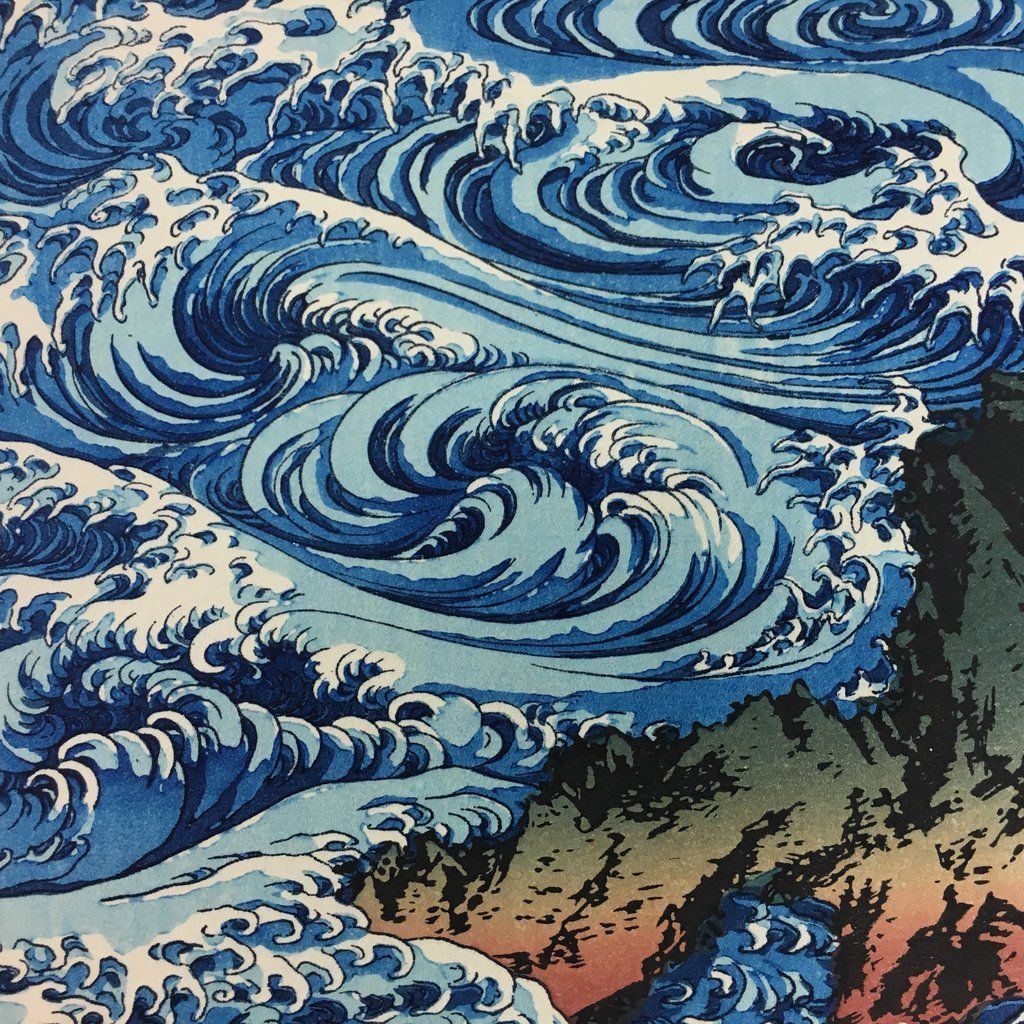
The Pacific, in this chapter, stands in for the world itself, in microcosm. On the surface, things are serene and alluring. The gentle waves wash against the boat, the scents of paradisical islands float on the breeze. It is a vast rolling prairie, larger than any even in the vast Americas.
And yet, beneath those waves and unknown terrors and countless tragedies. Untold numbers of sailors have already gone to their graves deep beneath the softly rolling waves.
Fields of all four continents, the waves should rise and fall, and ebb and flow unceasingly; for here, millions of mixed shades and shadows, drowned dreams, somnambulisms, reveries; all that we call lives and souls, lie dreaming, dreaming, still; tossing like slumberers in their beds; the ever-rolling waves but made so by their restlessness.
In the ancient world, Egypt was known as the place where mysterious and magical things happened. Ishmael would cast the Pacific in that same role in the modern one. Or, perhaps, it always was that way, but it took time for humanity to discover that it was so.
The Old Powers
Here we find, once again, Melville presaging and perhaps setting the stage for the genre of cosmic horror that is to come, fifty years hence. The ocean is once again a vast and unknowable thing, beyond the true comprehension of humanity. To this very day, there are mystery in the depths that we know nothing about.
I know I’ve mentioned it before, but the most relevant one is probably that no human has ever witnessed a sperm whale eating. We know what they eat, and a have some good guesses as to how they go about it, but the actual act itself? Forget it. Nobody knows for sure.
Anyway, in this chapter, it is not so much the sinister nature of the Pacific that Ishmael is describing as its allure, in no less overawed terms.
Thus this mysterious, divine Pacific zones the world’s whole bulk about; makes all coasts one bay to it; seems the tide-beating heart of earth. Lifted by those eternal swells, you needs must own the seductive god, bowing your head to Pan.

Invoking the ancient Greek god Pan is another big cosmic horror signifier. You can trace the origins of that genre back to the 19th century horror novel The Great God Pan, after all. The idea of something that is close to humans, likes humans, but is beyond or fundamentally different from us… that’s another key thing here, no doubt.
Also just the sexual anxiety inherent with an irresistible and extremely horny goat-man. Watch out! He’s out there, and he’s gonna have sex with your wives and daughters!
The portrait painted here of the Pacific is unlike that of the more generalized Sea we saw many chapters ago. It is not the cruel and cannibalistic nature that is emphasized, but a sort of ultimate neutrality, which accepts any interpretation. The Pacific is not going to try to win you over, it simply keeps rolling along, doing what it has always done, and that enough is to drawn in unwitting humans to their watery graves.
The Rock
Of course, Ahab is able to resist that allure. He is not swayed by the majesty of the Pacific, and he cares not for whatever superficial pleasures it may offer.
This is presented as both aggrandizing the old captain, and also showing the depths and intense focus of his monomania. He is so intent on his goal, he cannot even enjoy something as simple as breaking through into the wide blue ocean.
His firm lips met like the lips of a vice; the Delta of his forehead’s veins swelled like overladen brooks; in his very sleep, his ringing cry ran through the vaulted hull, “Stern all! the White Whale spouts thick blood!”
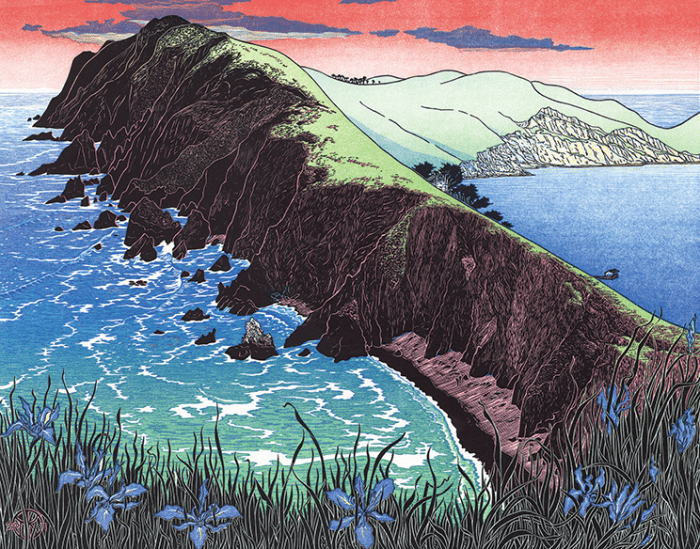
I do not think this is meant to be the picture of a laudable hero. Rather than being lulled by the Pacific, it only serves to intensify and focus his obsession.
It’s interestng the way Ahab is built up to be something more than human, and yet pathetic at the same time. Denying himself any and all pleasure has been part of his strategy from the get-go, that he would not be tempted into abandoning his quest. We see here that that has truly paid off, and hardened his heart against even the most alluring forces of the natural world.
Ah, that was a quick one. I feel like I’ve covered a lot of this ground before, it’s just playing on old themes, bringing them back up as we come into the final stretch. Dealing with forces larger than humanity, becoming perfectly stoic, etc etc.
In recent months, I’ve been reading through Ursula K Le Guin’s Earthsea books, it’s been fun but also… frustrating at times. One of the fantasy concepts I really enjoy is her take on cosmic horror, of a sort: the Old Powers of the Earth. Spirits from before humanity existed, which have vast magical power but also are limited in what actions they can take, contained by their physical form.
That was brought to mind with the description of the Pacific in this chapter. As a somewhat living being with its own mysterious agendas, but which cannot but act in small, subtle ways.
Anyway, don’t you worry, I’m not going on another break any time soon (knock on wood). Though I may take a week off around that move I’ve been talking about… we’ll see.
Until next time, shipmates!

 The Beige Moth
I have been enjoying your chapter writeups so much!! I’m reading Moby-Dick for the first time, and taking time to read all of the footnotes and explanatory notes in my edition as well as anything I can find online. Your blog has been the most helpful! I just realized I’ve reached my stopping point for this week, chapter 111 (I’m doing a buddy read-along which has kept me going with reasonable chunks of chapters each week), and so have you…! I hope your move and things in general are going well for you (and that you’ll have time to write more chap recaps!)! 😁
LikeLiked by 1 person
as always excellent insights – with the theme of lurking under the surface, is moby dick now sailing with or under the pequod? did we ever resolve the leaking oil problem?
LikeLike