
Well, after saying last week that I don’t read very much contemporary fiction, I went and tore my way through a book from 2024 in like 5 days.
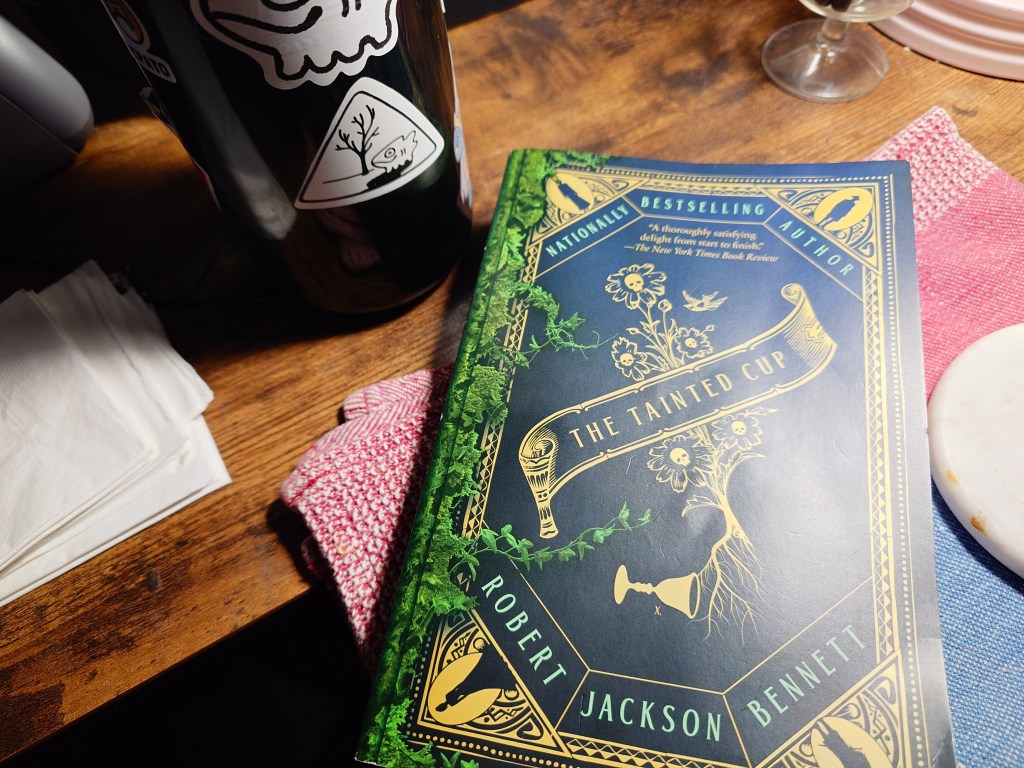
This isn’t really gonna be a review, but suffice it to say: The Tainted Cup is a real page-turner. I had a really great time reading it! Especially once I got going, the last 300 pages flew by like nothing. Maybe I’m not so allergic to modern stuff as I thought. But the ending really got me thinking about things, and thus I felt the need to get on here and Blog About It.
This is a fantasy mystery, which feels like a bit of a contradiction in terms. That’s part of what made me so interested in it. At first, I dismissed it out of hand: that would never work. How do you construct a proper mystery when the author can simply introduce new ideas willy-nilly?
After all, a mystery is about a sort of game, with rules that can be more or less fair, depending on the author. But if the author breaks too many of the famous commandments, then the game isn’t fair, and it can really spoil the fun.
This is, of course, my Umineko brain talking, haha. And I’m not really a stickler for these things in that way, I don’t usually try to seriously solve a mystery, and I’m not analyzing it through that lens. But still: this combination of genres feels fundamentally incompatible.
But… it honestly does work! The thing is: the ending, which left a bit of a bitter taste in my mouth and got me thinking about this whole exercise and what it says about its constituent genres. I think it may have turned out… just a little fascist. A bit fashy, if you will. Not much, but just… a tad.
Setting the Table
Okay, so first of all I should do a quick summary of what’s goin’ on in this book, just in case you’re reading this and haven’t read it, and to make sure we’re all on the same page.
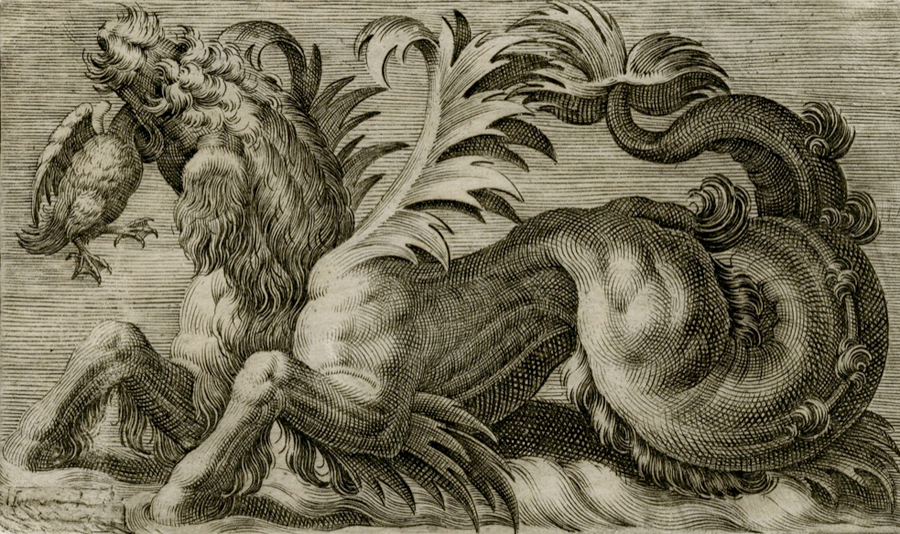
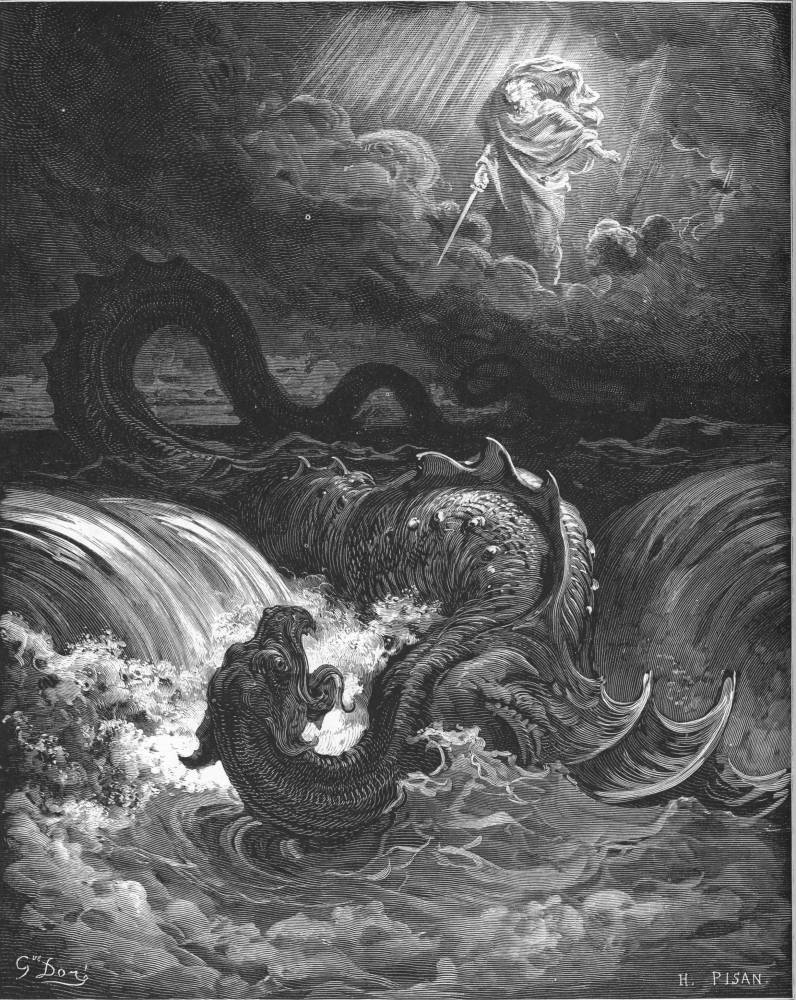
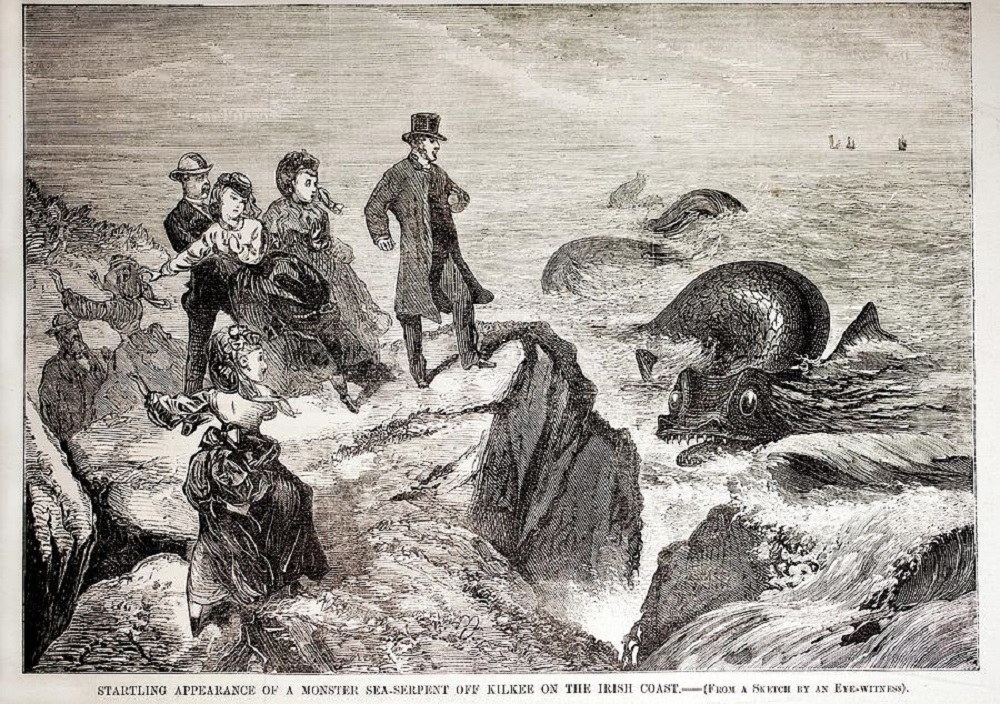
The Tainted Cup, first book of the Shadow of the Leviathan series, is set in the fantastical empire of Khanum. Like all good fantasy books, it features a map in the opening pages, showing that this empire has a series of ring walls between the capital and the coast. It soon becomes clear that these walls exist to stop the advance of leviathans, giant monsters which rise out of the sea on an annual basis and attempt to walk into the fertile plains of Khanum.
Our story concerns a young lad named Din, who lives in one of the outermost areas, beyond the third wall and near the first-defense sea wall. His brain has been altered to give him a perfect idetic memory, he can always remember everything he experiences, though he must sometimes use scent triggers to recall them with better accuracy.
You see, this world is not the kind of fantasy world where there are wizards running around casting spells and goblins hiding in caves (at least, not yet). The fantastical nature of things all runs through plants and bio-engineering. These leviathans have special blood that, somehow, allows for the development of biological modifications that grant people special abilities, and extreme modification of plants towards all kinds of purposes.
Regular ol’ mundane materials like steel and rock exist, but they are very out of focus. Buildings are made of fernpaper and fretvine, specialized plants altered to fill various roles. In an early scene, we learn about a special mushroom that the rich keep in their homes to cool and dehydrate rooms.
People receive special grafts or infusions to enhance their abilities, though these of course also come with drawbacks. The usual stuff: sterility, reduced lifespan, etc. Some people have their brains altered for special roles in government, like Din, while others have their bodies changed to fit different roles, like the cracklers, who stand some eight feet tall with bulging muscles, or the scientist/doctor Apothetikals who have an enhanced sense of smell.
Anyway, Din works as the assistant to a criminal investigator who has seemingly been banished to the boonies for some offense in the imperial core, Ana Dolabra. She is our Sherlock Holmes analogue, with all kinds of weird habits, like going around blindfolded and never leaving her home because she feels overstimulated by the world, and consuming mountains of books.
The plot concerns a series of murders where people are killed by fast-growing bamboo erupting out of their bodies, a special variety called dappleglass which once accidentally destroyed an entire canton of the empire. From that, you can kind of glean where things are going: this region could have been saved, but wasn’t for corrupt reasons, the culprit is from there and is out for revenge.
The action quickly moves from the true middle of nowhere to Talagray, the center of the imperial effort to repel this year’s leviathanic invasion. It is in the midst of this regular panic the investigation must continue with extra urgency, as some of the murder occurred inside the outermost wall, causing a breach which allowed one of the leviathans to briefly rampage across the outer ring of the empire, killing thousands.
SPOILERS FOR THE ENDING AHEAD!!
It turns out, those deaths in the wall, as well as the deaths of other engineers involved in the defense of the empire, were entirely accidental. The culprit, an apothetikal from Oypat, the destroyed canton, who is found dead in her laboratory, collaborating with an enormous crackler from the same region. But, there was another, secret collaborator: one of the investigators on the team helping Din and Ana, Uhad!
It turns out, this was all about fighting internal corruption. Uhad served as the chief investigator in Talagray for many years, and had to deal with the corrupt nobles constantly interfering in things. When he learned about how this particular family had engineered the destruction of Oypat to enrich themselves further, he decided to help the murderer seek revenge.
The course of the investigation uncovers the truth behind this rich family, the Hazas, and Uhad, so all are set to be punished. Well, the local head of the Haza family is actually set to take over the whole family, as she turned out to be innocent and naive of the entire plot. Some of the murders being investigated were committed by a specially modified assassin employed by the Hazas, and that assassin turns out to be a woman who was pretending to be this girl’s assistant.
In the end, Ana rebuke Uhad and his methods, saying that she was secretly on the trial of the Hazas at the time, being sent here specifically for that purpose by one of the highest officials in the empire, the seemingly-immortal Conzulates. His rash vigilantism only caused unnecessary death and suffering, the system was working towards taking care of things on its own, he just had to have more faith in it!
A Different Kind of Empire
One thing that struck me in this book is how it treats the idea of empire, which is different from how it is commonly portrayed in fantasy novels.
This empire is not inherently evil. At least, the characters we follow don’t think of it as such. It is sort of a union of people to accomplish a singular purpose: protection from the leviathans. Everyone lives in fear of these monsters that come out of the ocean every year, it is a continual rolling crisis and traumatizing event. The potential for catastrophe is never gone, and it’s only through herculean group effort that the people can remain safe.
This is, of course, a classic reactionary fascist narrative. You see it all the time: we’re under attack! We’re being invaded! We have to fight back against the teeming hordes! The difference here being: the threat is real, and it must be addressed not by individual heroism but by collective effort. These leviathans are absolutely gigantic, no individual person could ever hope to kill one, it’s only accomplished with enormous mortars tossing explosives at them.
The setup immediately recalls Attack on Titan, another famous fantasy series that eventually desceneded into outright fascism, so I was already on the lookout for this tendency. But the way it’s played so straight and so earnestly is what really got me, especially at the very end.
Like, the argument that Ana makes, practically directly to the reader, is “let the system work, it is capable of fixing itself.” Which is wild-ass thing to read in America in 2026, lemme tell ya.
It brings my mind back to the 2004 US presidential election, where one of the main arguments for keeping George W Bush in office was to “stay the course” and “you don’t change horses in the middle of a race” and whatnot. Basically: we should keep the same leader around in this time of crisis, even if he isn’t the most competent person in the world. This is not the time for equivocation and self-doubt, we need to be bold and stick with what we’re doing, no matter what.
The sense of constant crisis gives you license to ignore any problems going on, or forces you to reframe them entirely in the context of the crisis. These murders were wrong because they caused the crisis to be worse by killing people working on the wall. Any problem is a problem because it “weakens the empire”, and the empire is all of us.
That’s literally like the official imperial slogan of Khanum: We Are The Empire. Everything is subsumed by the collective effort. The actual emperor is a distant and unknown figure, and the highest officials are semi-mythical. We are told that they are given special modifications to become ageless, but they continue to grow until they can no longer move and must be mercy-killed. Our protagonists are sent to meet one of these conzulates at the end of the novel, the one who sent Ana on this special mission to take down the corrupt Hazas.
The Detective’s Paradise
As I mentioned earlier, a fantasy mystery feels like a contradiction in terms. And that may be so if you try to set one in an existing fantasy world, but when you are molding the world to fit your narrative needs, it turns out it works amazingly well.
The shape of this world is fit perfectly to the needs of a detective story. The most obvious thing is the existence of “engravers”, like Din. People who have been granted idetic memory, and whose memories, we are explicitly told, count as hard evidence in court. It’s somewhat akin to the conceit of “saying things in red” in Umineko: we can form our mystery on the bedrock that certain things are treated as irrevocably true, and in this case that is… what our protagonist experiences.
So, everything that is narrated in the book (it has a first-person perspective) is, at some point, repeated verbatim to our detective, Ana Dolabra, and is treated as a hard truth. There is no room for mushiness or opinion, no need to convince people or make an argument, these facts can simply be accepted because they come from our window into the world. It’s a brilliant conceit, honestly.
But the world is shaped by its attendant genre in other ways, as well. For example: this must be a world where justice can be served. There is not a reasonable doubt that must be hashed out in an adversarial court, it is an empire in constant crisis. There’s no time or space for deliberation and doubt and careful process, we can just get down to business and reach solid conclusions.
In order to give the mystery substance and conncetion to the larger world, thus allowing for exposition about it, it has to be related to a wide-ranging conspiracy. Thus, we have to have corruption inside our empire… which must be rooted out by the mechanism of our empire. For our heroes to succeed, they must work within the system, because to be outside of it would be to be on the side of the leviathans!
Thus, the shape of the world as a place for a Good Empire to exist is actually necessitated by its genre. You could have a much messier story in a fantasy world, but it wouldn’t quite be in the the same tradition of detective-focused mysteries that this is operating in.
The Leviathans on the March
Okay, so it turns out this novel kind of exists at the intersection of Umineko no Naku Koro Ni and Moby Dick, two monumental works of art that fundamentally altered my brain chemistry in the last decade or so.
The Umineko connection is more tenuous, the idea of a mystery novel having a specific mechanism for hard truth to build around, but the Moby Dick one couldn’t be more obvious. Any time I see the world “leviathan”, my brain starts humming: oh boy, how is this going to relate to my favorite whale book!?
Now, at first it may seem that in this case the answer is: not at all. But! There is something interesting going on here, with the setup being almost the inverse of Moby Dick.
Think about it: the whales are on land, the empire isn’t hunting them but rather being attacked by them, and the work of killing them is entirely communal rather than being stuck on one person in a dinky little boat. Of course, nothing on either side of that equation is actually that clean cut when you get into the details.
Take this fact for example: the source of all the wonderful biological engineering technology in the Empire of Khanum is leviathan blood. They harvest it from the corpses of the slain monsters and use it to create the grafts and alterations that allow for superhuman feats. So, much like the crew of the Pequod, the empire is getting something absolutely essential to its way of life from these creatures.
Now, the fact that they are “attacking” the empire… in the past, the leviathans apparently used to come up on the plains through a regular pathway called the Titan’s Path, and eventually simply lay down and die, after wandering for a bit. Khanum is not a naturally occurring thing, it does not pre-date these creatures and their habits. It was built there, right in the path of what they were already doing.
Which adds up to: this empire is a machine built to extract a precious resources from leviathans, just like the Pequod.
We spend this whole novel on the outskirts of the empire, the front lines of this continuous battle. What things are like in the inner sanctum is a total mystery. We hear a few scant legends about the emperor himself, but he is a distant figure. It’s not even totally clear if he’s still alive, some sort of immortal god-emperor like in Warhammer 40k, or if he died ages ago.
Just like in Moby Dick, the focus is on the struggle, the work being done out in the wilds to protect the peace back at home. Very little of ordinary domesticity is seen, we hear about how everyone is working together to prevent this giant monster from destroying things and about these evil corrupt nobles living in absolute decadence.
The difference, of course, is that rather than being invisible, the work on the front line of the wall is all too visible. It’s all anyone cares about! This focus is what allows the corruption of the nobility to fester, the need year after year for the produce of the lands they own.
The idea that this work may be unnecessary is very compelling, but I don’t know if the series is going to take that seriously. Apparently the second book directly concerns the research into leviathan blood, so I will read that with great interest, as well as the third which is coming out later this year.
Truth, Justice, and Copaganda
At the end of all things, I want to come back around to the thing in this book that gave me pause. There is an extremely direct defense of the status quo, put in the mouth of Ana Dolabra, our autistic savant detective hero.
Oh yeah, by the bye, that is what she is. She doesn’t have any special biological modifications, all her quirky habits and superhuman abilities are completely natural and in-born. She is the omnicompetent detective who hates being overstimulated because that is a type of character that exists in fiction already, no need for anything speical.
The message she conveys to the villainous Uhad is: you were wrong in facilitating these vigilante killings because I was on the case. The system was working as intended, self-correcting with its existing mechanisms. The status quo was good, you were just too blinkered in your perspective to see it in operation.
So like… this is just copaganda, at the end of the day. Which is to say: it’s saying that things are working fine, and it’s only the lack of perspective that makes it seem like there are any problems. This is an absolutely classic argument that goes back to the Book of Job from the bible, saying “who are you to criticize something you don’t full understand?”
Of course, the obvious rejoinder is the lived experience of people existing under that very system. Uhad suffered and say incredible suffering as a result of this existing system, which spurred him to action. But the construction of an objective truth through Din’s engraver powers allows us to counter that definitively. Yes, he experienced what he did, but we can say with absolute certainty that he was wrong, actually.
The other aspect of this that makes it classic copaganda is the idea of a branch of the government that is the only thing protecting the common folk from the terrors of nature/criminals/whatever. Here embodied by the ongoing threat of the leviathans, which I’ve already dissected above.
Thinking about it now… this book kinda reads like Imperial China propaganda, in a funny way. Instead of the yellow river, it’s the march of the leviathans that is the natural disaster that must constantly be managed, year in and year out. The empire exists to serve a purpose, which everyone in it contributes to, collectively. There are corrupt nobility that must be purged to protect the sanctity of the empire itself. Huh.
Fantasy Worlds as Arguments
The obvious rejoinder to this whole blog post so far is: so what? It’s just a silly little fantasy story, stop taking it so seriously. People are allowed to write whatever they want, for fun!
And to that, I basically do agree. As I said, I had a great time reading this book, and am eager to read more. But I also think this is a good example of how everything is political because it exists in the context of reality. A detective story tells you something about the nature of the work that real-life detectives do. It shapes the way that you act in the real world, not directly, but in subtle ways.
It’s always important to keep that context in mind. The construction of a world where a fascist fantasy is the real truth of the world is potentially dangerous for that exact reason. This one isn’t quite so straightforward, at least I hope, but it is fun to pick it apart and look at how it works.
The world that you live in and the things that you engage with shape who you are as a person, but you don’t have to be passive in that process. By stopping and thinking about them, you can see what they are trying to say, what assumptions they may be making about the world and how things work. Which can, in turn, help you understand how you see the world, what lens you use to interpret events and how you react to them on an emotional and intellectual level.
A fantasy world is an argument, though not a direct one. It is not necessarily saying this is the proper way of things or the way that things are, but it contains messages about the operation of things in everyday life, no matter how out-there it may seem on its surface.
One of the reasons it is so tiresome to discuss media these days is that people are constantly applying systemic complaints to individual works. You can argue until the cows come home if any individual TV show is copaganda or any particular piece of clothing or jewely is cultural appropriation. That’s not really what those concepts were conceived of to address. They are about wider trends in media, in the mental ecosystem that people exist in.
While you are analyzing things or ruminating on their themes, it is important to keep in mind that there are no thought crimes and no thought heroism. The most common sin of a book or movie is to be boring, not to break some sort of cultural taboo.
That’s all to say… take it seriously, but not that seriously. It’s just a silly little fantasy book, at the end of the day.
Ahhhh, man, felt good to get that out. I’ve been thinking about this one for a week, since I finished the book. Didn’t quite get things in the perfect shape… but oh well, as I always say I’m no academic. This is just to get some thoughts out of my head and onto the page, haha.
I really am excited to see where this series goes, especially if it ends up addressing more of the nature of the higher echelons of the empire, and where this biological technology comes from. I didn’t mention earlier, but these titanic sea monsters have weird human faces on the bottom of them, so there may be more magic going on here than there seems. Could be some sort of cursed artifact in the ocean or whatever.
It is interesting how it feels so grounded in hard reality, due to the eidetic memory thing, and uses that to sort of… excuse the fantastical leaps it goes to. There are no quips drawing attention to the ridiculousness of some of these things, it’s all played totally straight. Which is the correct approach, I think!
I was feeling a bit silly about comparing this to Umineko and Moby Dick, my Two Favorite Things. Like, damn, have I read anything else lately? And the answer is yes of course I have. I’ve been reading a lot more in recent years thanks to Shelved by Genre. I re-read all of Earthsea, I read Book of the New Sun, the Neuromancer series, etc etc. And I watch plenty of movies. I am in no way suffering from Boss Baby Syndrome, as they say, this is a reasonable connection to draw.
Until next time, shipmates!

 The Beige Moth