
Alright, let’s try something else. Again!

Those weekly blog posts weren’t really working for me. I don’t like the pressure of having something to talk about, and then they always felt too big and unwieldy and unfocused. Not the kind of work I can look back on with pride, just kind of filling time, y’know? I don’t like to post just to post. Brings back bad memories of trying to unlock privileges on message boards as a middle schooler by making enough posts, haha.
So: I’m gonna write about games after I finish them, instead. Or movies or books or whatever. I’m not promising weekly, but I’d like to do them pretty often. I’ve been agonizing a bit over format and timing and whatnot, but there’s no better way to do it than to do it.
The Review Part
This time: Romancing SaGa 2: Revenge of the Seven! A game I finished earlier this year, and enjoying quite a bit. But I don’t want to format this like a review, necessarily, where I’m like telling you about the game feel and fun factor and whatnot. Suffice it to say: I loved this game, and it’s exactly the kind of thing I want to see more of, for various reasons. Highly recommended, A+, 5/5, walk don’t run, etc etc.
This was developed by the same team that made the Trials of Mana (formerly Seiken Densetsu 3) remake a few years back, called Xeen. They’ve worked with many different companies, mostly doing contract work, but have broken out with these more recent remakes, which are excellent. They have a knack for both creating a really colorful anime aesthetic that is true to the original games, without feeling dated.
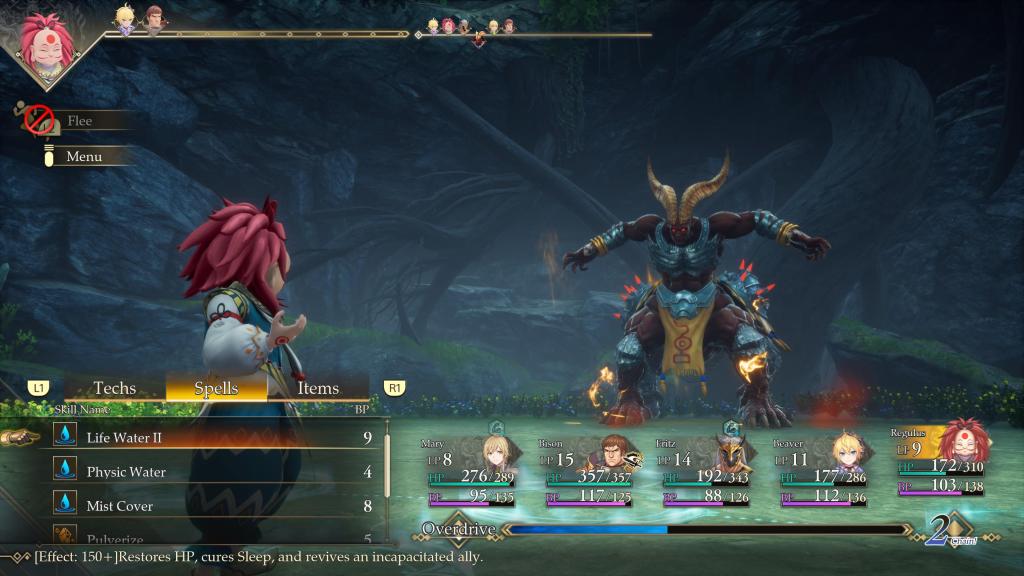
They are also extremely good at smoothing over some of the, let’s say, usability issues with older RPGs. Adding objective markers, remaking menus and adding systems to make things easier to understand. It’s as though they polish the rough diamond of the original game, rather than leaving it as it is or making something completely new.
Many recent remakes/remasters end up in kind of an awkward place, where they want to remain “faithful” in some nominal way, but also want to make a game that is appealing to modern tastes. So you get old graphics mixed with new in an odd way, like that Star Ocean 2 remake, or very faithful remasters that only fix a few key flaws, while leaving others untouched. This is not an issue here.
A Tale of Swords and Souls, Eternally Retold
Anyway, let’s get into how this game works and why it’s so fascinating to me.
It starts off with an extremely normal RPG story: you are a prince, going out with your father on a mission to destroy some monsters. Now, this prince is a bit sickly and not good at fighting, but nonetheless wants to be included, while his older brother is very strong and smart and better at everything. Naturally, he dies tragically, and then the father does as well.
Where it gets interesting is that their abilities and memories are then inherited by our weak, shitty protagonist. He becomes the sum of experience of his father, through a mysterious new form of magic that forms the spine of this game’s premise. He goes on to get revenge, and expand the nascent empire a bit, before there is a timeskip of hundreds of years!
Yes, this game takes place over several hundred years, I think mine was over a thousand by the end. Naturally this doesn’t really line up with real-world history, we’re firmly in the zone where Fantasy Europe is just happening everywhere, all the time.
Our protagonist, then, is not just the one prince, the singular royal trying to get back his kingdom. It is not the typical revanchist fantasy, the right emperor is already on the throne! No, instead you are a series of emperors trying to expand the empire via standard RPG adventures. Go to a new place, find out what their problem is, help them fix it, and in return you gain additional territory for your nationalist project.
Adventure Nation
Now, there are a couple of interesting wrinkles to this.
First is that beyond the first and last, these emperors are not really characters. They get some bits of dialogue here and there, but they’re very generic, and certainly not built out like a standard RPG hero. It’s more like you have generations of generic tavern hires.
After a timeskip (or dying to a boss), you pick a character to be the new emperor based on their class, which determines their appearance and what skills they learn most easily, as well as their stat growths. Then, you go recruit five more, forming a whole team of essentially generic adventurers to go and represent the will of your empire in the world.

This empire is a true melting pot. Anyone could be the new emperor, it doesn’t seem to be tied to blood at all. Or, if it is, then there’s a lot of intermarrying with newly added nations. You get unique classes from many of these different places you add, including tribal warriors and whatnot, as well as fantasy creatures like mermaids and lizardmen. There’s even a robot emperor! Who is very powerful, as she is normally uncontrollable in battle, but as the emperor you have complete control of her actions.
There is no hint of any sort of imperial control of projects beyond the fostering of trade and diplomacy. Ending conflicts, freeing the people from the threat of monsters and the evil Seven Heroes and their minions. The only place that the idea of the empire being a burden is even lightly touched on is with the pirates, who want to keep doing piracy even after they’re brought into the fold.
Well, there’s also one nation you bump into early on, Cumberland, which explicitly resists imperial control. They want to maintain their independence, but once you help resolve a succession crisis and end up with your own pocket king on the throne, they join with no issues.
This is a fantasy of empire, clearly. The idea that we can all just get together, under one banner. It’s like the positive version of what is normally a megalomaniacal scheme: conquering the world in the name of peace and security! But this time… for real? Like that is actually the goal, and in the end it works and everyone is happy.
The Heart of Darkness
I’ve touched on it before, ages ago, but there is a sort of antisocial, fascistic darkness at the heart of all RPGs. Or at least all traditional ones. I don’t think this game is really any worse than, say, any given Diablo game, but it’s interesting how it brings some aspects of this formula to the surface in a somewhat uncomfortable way.
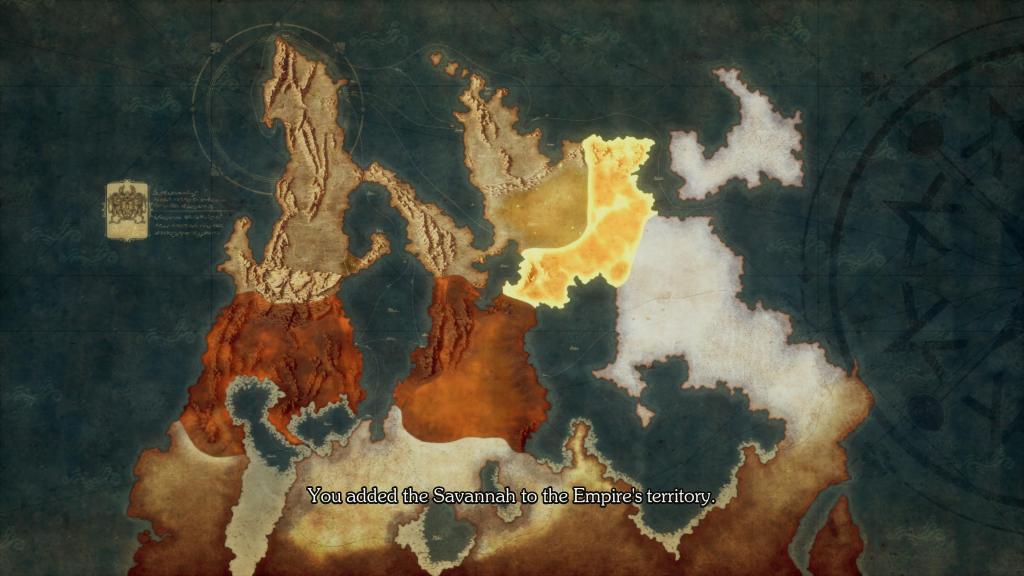
There is no two ways about what is going on in this game: you are the personification of The Empire, and you go around adding new land to the map. There’s a little cutscene and everything, where great swathes of the map start glowing gold to indicate that they are now part of Your Lands. There is a heavy implicationthat this is somehow restoring them to the state in which they are safe and peaceful, the way they should be.
So, you are going out and bringing civilization to the savages of the world! Kinda gross, and it feels worse as it goes on. You start off bringing in other Fantasy Europe-style areas, but then you go to the “savannah” and bring in some nomadic tribes, then a deep jungle with some Amazons, and some islanders… it feels worse.
But what are your enemies? Who are The Seven who are having their titular Revenge? Oh, they’re a shadowy group of former heroes, betrayed by the empire of the past, who gave their all to save the world, and must now be put down as their revenge goes off the rails to attempt to destroy the world.
The plot really is an inversion of a normal RPG plot, in many ways. The antagonists are a singular group of heroes, and the protagonists are a group of interchangable goons working for a growing empire. The actual characters here are the villains, because they persist over time, having gained immortality after they became monsters in another dimension (after being banished for having undue political influence due to their status as heroes in the war on the termites (more on that later)).
There is an ancient betrayal, and it was your side that did it! Now you just have to put down these heroes like rabid dogs because their trauma has turned them into monsters, a very tired trope that is very overused these days. That evil can only be good that has gone sour. At least in this case they’re self-aware about it, for the most part. The Seven know they’re evil and are harming people, they just don’t care. They’re playing the game of being villains because they think it’s their right, as vengeance for what was done to them.
Also, it is worth mentioning that the versions of the Seven you fight are not their true bodies, but, in typical RPG fashion, projections from another dimension. As long as one still lives in the real world, they can keep coming back, as their true forms exist only in another dimension, where you must finally go and beat them once and for all.
So, to recap: you are the state trying to destroy an endlessly reviving enemy, who is manipulating things from beyond your reach. It’s a paranoid fantasy, in the end, to say nothing of the literal bugs beneath your feet….
The Big Bug Problem
There is a funny bit of RPG storytelling here. It turns out that the power you build up over generations actually is better than that of the heroes of eld, in this world.
The Seven were trying to defeat the threat of the Termites, a group of bug monsters that were ravaging the entire world in their time. They popped up all over the place and killed tens of thousands. It’s a truly desperate fight, like something out fo a scifi novel.
In the present storyline, the Emperor also faces the threat of the Termites, and they’re… not that tough, frankly. At first you find a nest under the savannah, and defeat them there pretty easily. Later, they infiltrate your palace, and you have to face them as soon as a new emperor is crowned! That’s a fun sequence, where every person you talk to in the palace turns out to be a bug in disguise, and then you must enter the tunnels underneath and face the fearsome Termite Queen.
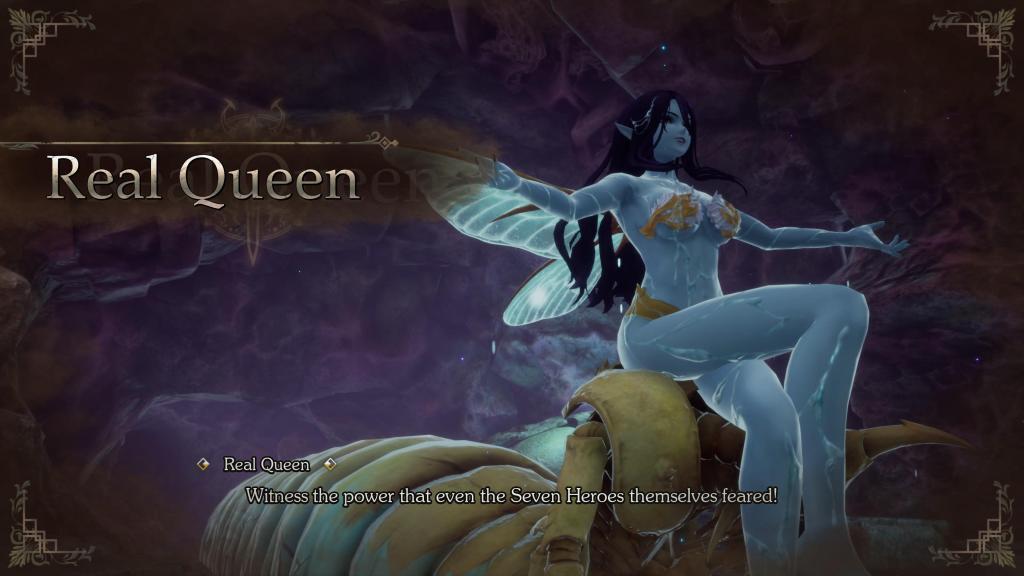
And… you beat her, and that’s that. This Emperor is just stronger than the ancient heroes, they dealt with the problem that caused so much strife in the past. The present and future are better than the past, we shouldn’t be held back by old grudges and recriminations.
They’re the typical JRPG threat here, the Lavos or Zeromus or what-have-you. A big evil thing that you have to go get rid of to fix the world, something out there that’s the source of evil. Except… they’re not? The actual source is the Seven, who were caused by the Termites, but aren’t dealt with until afterwards. It’s a bit odd, in an interesting way, showing that dealing with root issues doesn’t necessarily solve everything downstream. I don’t think the Seven even comment on you beating the Termite Queen when you confront them.
The Ultimate Nation
This game is, essentially, the ultimate nationalist fantasy. For what nation? Whatever one you live in, I guess!
Like, you get to dispense with all the boring business of policy, and just go fix things in the world, and bring everyone together. That’s the Emperor’s whole job. The power of the state can only do good! You may have to make some hard decisions, like allowing a volcano to erupt and destroy an island in order to gain the favor of a reclusive wizard, but so be it. It’s for the greater good, which is rooting out and destroying the designated Evil Doers of the world.
It brings to mind, for me, this idea of like… the beautiful dream and promise of the United States of America that could never exist, becuase of how this nation was created. When I was learning history in school, I thought about how great it could’ve been if the USA had joined with Haiti and declared independence from Europe, brought along a wave of revolutions and freedom for all the people of these continents… but alas, racism exists, so it was not to be.
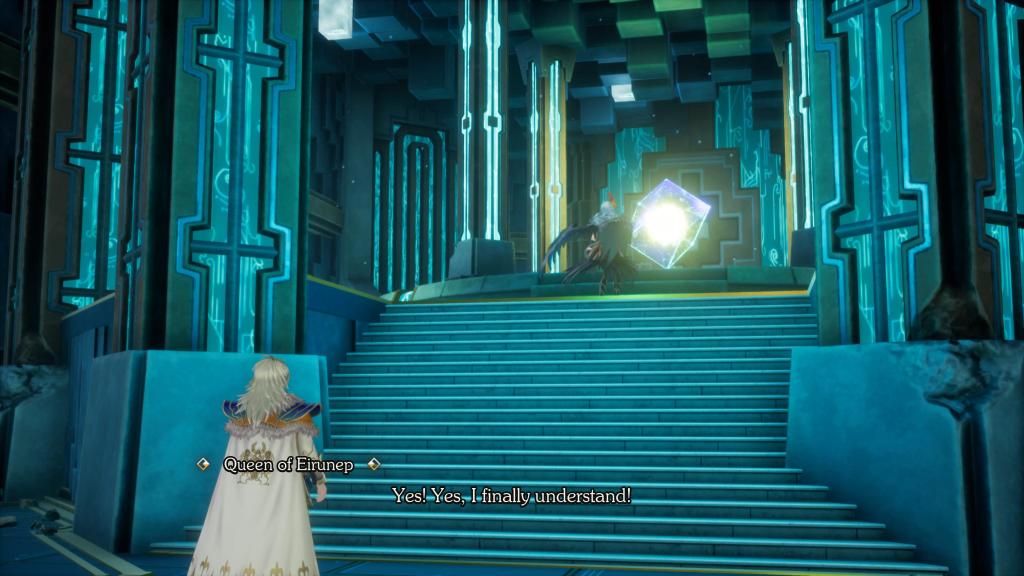
If you could just wave away all the problems of the real world, all the irreconcilable political differences that actually matter, it would be great to get everyone living under one world government. We could all get along and live in peace under the watchful eyes of our glorious hero-emperor, who went around killing the Bad Guys for us.
It’s such a sweet and naive vision of the world… which could never survive contact with reality, and indeed viewed from any sort of realistic standpoint is utterly repellant. This game plays like the lies in a textbook in this modern empire, which is trying to suppress dissent.
This is the story the Imperium of Man from the Warhammer 40,000 universe would tell about itself, it’s on that level. Completely un-self conscious, just telling a goofy story of adventure that is also about an expansionist empire ending the threat of a shadowing cabal of evil, who call themselves heroes.
In that sense, it’s a perfect 90s throwback. After the end of history, in the afterglow of the end of a great global clash of ideologies, you can have fun and view history through various lenses without worry.
But as I always say, history has not ended, and will never end. The wheel still turns, and these chickens come home to roost. Nothing can be this simple, in the real world. And it turns to poison once you expose it to air….
That Sinister Urge
Ultimately, it’s hard to be too harsh on this game, because a) it’s such a naive and fantastical fantasy and b) the actual plot hinges more on interpersonal drama anyway. The focus with the Seven is on the facts of how they were betrayed and why, how they became monsters in the first place. There’s no question that they are now monsters and must be destroyed, the mystery is in hows and whys.
All this political stuff I’m talking about is basically ignored by the time you’re a third of the way into the game. It’s all background noise, just an indicator of progress through the story. The lands you’re adding aren’t even very populated by the end, just vast stretches of wilderness that are ostensibly now part of your empire.
But… that very act of taking the political out of focus is the most insidious part, really. The idea that politics is somehow now “solved” and we can focus on fixing the real problems. This is the whole issue, in a nutshell. Just taking for granted that things are good in the empire, or if they’re not then it’s not your problem because, even though the player character is the personification of that empire they really have no influence on its day to day business beyond adding more territory to it.
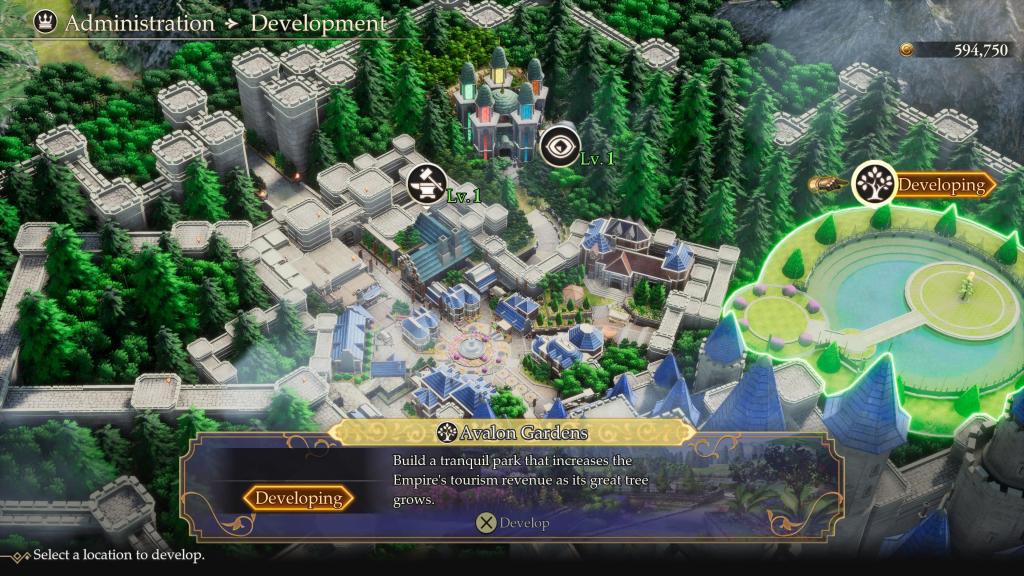
This instinct to ignore the boring stuff that’s kind of a bummer and just focus on the fun part… is, no joking, what leads to the Iraq War. It’s what leads to that instance of “nation building” and other horrifying policies and actions that have plagued the world for time immemorial.
“But,” I hear you saying, “this is just a fun little romp! It’s a classic RPG, of course it’s not focused on tax policy and whatnot. Can’t you just go along for the ride?” To which I say: I can and I did! I think the game is good and fun. But it’s weird, the way it’s about imperialism being Good, Actually. Most RPGs are not about that! They’re about people being ground up in the gears of society or the forces of history, not people at the top, in control, deciding to just go on adventures all the time!
It’s very telling that this did not become the formula for this series. They tried this idea once and then did something completely different going forward. The next game goes back to the idea of “these people put together from various walks of life must solve this big world-ending crisis”. SaGa games are generally about both the world and individual characters at the same time, in an interesting way. This game fumbles that horribly, ending up being about neither. The player characters are generic and boring, and the world is an afterthought.
So yeah: good game, just a little fascist.

 The Beige Moth