
Ahh, man, I had a nice vacation.

Didn’t go anywhere, but just… hung out at home, like the old days. Reconnecting with the version of myself who was a layabout in college and when I worked at the market, playing Final Fantasy XIV for hours and hours every day, sinking time into JRPGs, so on and so forth. It’s refreshing, getting away from work and indulging in old pleasures like that. But, it’s time to get back to business.
Summary
On another fine, enchanted summer day on the equator, in the middle of the Pacific ocean, Ahab approaches the side of the ship and looks down at his own shadow in the water. The profound peace of that moment takes him out of his usual brooding mood, just for a minute.
Starbuck thinks he hears Ahab let out a sob, and softly approaches him. Ahab immediately notices the first mate and launches into a speech, wherein he expresses deep regret for his long decades of whaling away from his home, wife, and son in Nantucket. He laments the isolation of his elevated position as captain, his old age, and begs Starbuck to stay close, as his one remaining chance for salvation can be seen in the mate’s eyes.
Seizing on this, Starbuck relates that he too has a wife and child at home, and often sadly thinks of the boy growing up without him. Starbuck says they could return to Nantucket immediately, put all of this behind them, and even begins giving orders to that effect.
But it is all for naught. Ahab turns his eyes away once again, and the spell is broken. He claims that as long as God exists, he cannot have free will, and something within him drives him to fulfill his mad quest. His only rest will come with death.
Turning to look Starbuck in the eyes again, he finds that he has fled. Looking down in the water once more, Ahab sees himself and his shadow, Fedallah, reflected back.
Analysis
Well, here we are, at the very last possible moment to turn away, and Ahab has made his choice. The die is cast!
This is one of those chapters that really feels inspired by Shakespeare, structurally and in content. The dialogue is so florid and poetic, and it reads like something just before the climax of a stage play. Melville is really teeing things up for us, as you’d know if you peeked ahead at the title of the next chapter: The Chase—First Day.
Girlish Air and Boyish Water
The opening of this chapter is, weirdly, the most explicitly sexual since that one all about squeezing sperm, way back when. We start off with this extended metaphor explaining how the water and air near the horizon were so close in appearance that they were only distinguished the same way as human gender.
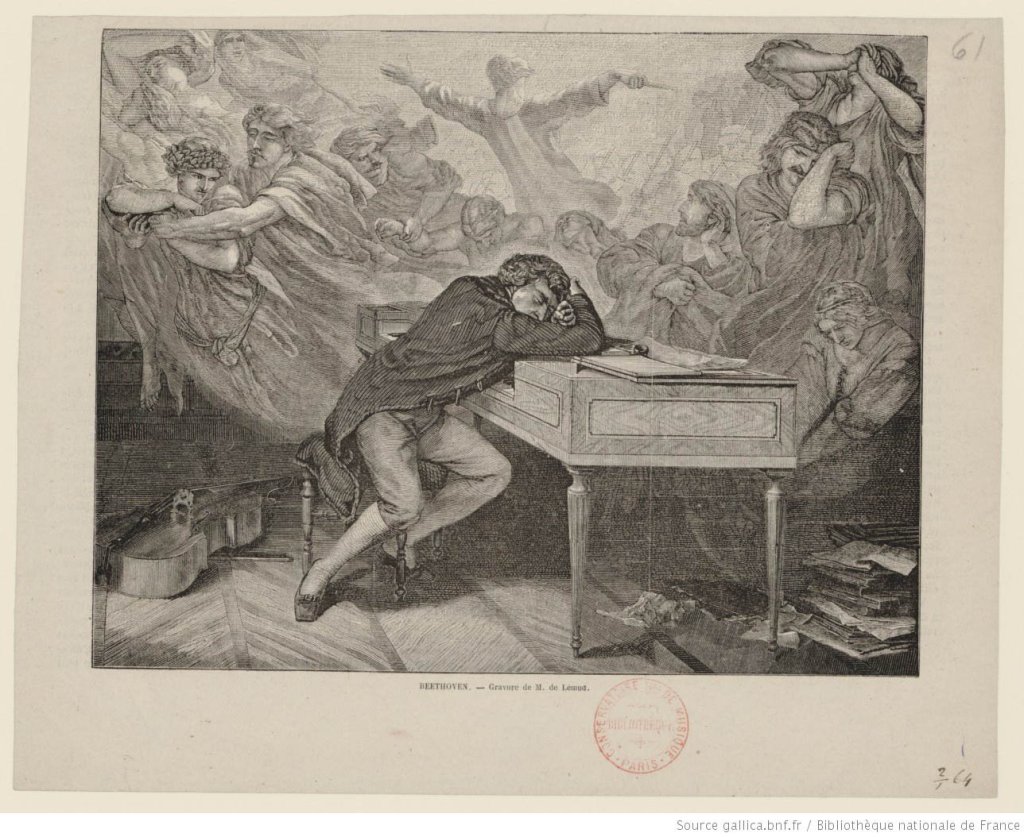
The sea is coded as male, active and roiling and powerful; while the air is female, innocent and gentle and alluring. It struck me as a bit odd, this late in the book, to establish this dichotomy in such a concrete way, lord knows we’ve had no shortage of descriptions of the sweet tropical air of the Pacific and the destructive power of the sea throughout the latter portions of this book.
But, they are not put in opposition to each other. They are united in perfect peace at the distant horizon, blending into one another, working together to create this scene that almost cures Ahab of its madness without anyone else even saying a word.
But the lovely aromas in that enchanted air did at last seem to dispel, for a moment, the cankerous thing in his soul. That glad, happy air, that winsome sky, did at last stroke and caress him; the step-mother world, so long cruel—forbidding—now threw affectionate arms round his stubborn neck, and did seem to joyously sob over him, as if over one, that however wilful and erring, she could yet find it in her heart to save and to bless.
Thus we see the power of nature offering a lifeline to our poor, heroic captain Ahab. He can be released from his fate, if only he’ll take it. The water will physically move him back to his home, while the air will tame his madness.
Of course, another way to look at it is that Ahab looks at this sweet union on the horizon and is reminded of sex, and what he’s left behind, thus leading to his speech to Starbuck.
What Is Left Behind
Whatever it is Ahab saw on the sea that day, it was enough to remind him of his home, and what he left behind, the things he was truly on the brink of giving up forever. And in the process, we finally learn something of his background!
Ahab started his whaling career as a harpooneer, not as a common seaman. He has never had the camaraderie of his fellow whalers as peers, he has always been apart, even as he’s spent the vast majority of the last fourty-four years at sea. Rising to the rank of captain, his isolation only increased, and he finds himself a slave to his own ambitions and responsibilities, in quite explicit terms.
When I think of this life I have led; the desolation of solitude it has been; the masoned, walled-town of a Captain’s exclusiveness, which admits but small entrance to any sympathy from the green country without—oh, weariness! heaviness! Guinea-coast slavery of solitary command!
He’s just tired of this shit! And he doesn’t want to do it anymore. He goes on and on like this, revealing that he has a wife who he barely knows (“rather a widow with her husband alive!”). Seemingly married right before his fateful encounter with Moby Dick, he hasn’t had time when he was in his right mind to be around her.
Ahab thought that his life ended when he lost his leg, and this is him realizing, all at once, that it didn’t. He’s not doomed, he’s not marked, he still has a chance! He could just throw all of this nonsense out right now and go home, live a happy life.
Naturally Starbuck siezes on this, and encourages him to follow through. We learn that Starbuck, too, has a wife back in Nantucket, and a young son.
“’Tis my Mary, my Mary herself! She promised that my boy, every morning, should be carried to the hill to catch the first glimpse of his father’s sail! Yes, yes! no more! it is done! we head for Nantucket! Come, my Captain, study out the course, and let us away! See, see! the boy’s face from the window! the boy’s hand on the hill!”
The stalwart first mate is not made of stone after all. He has his own hopes, and his opposition to this business with the white whale is not entirely born of religious and moral concern. He, too, wishes to live to old age, to enjoy the fruits of his labor.
Alack and alas, it’s not to be!
The Emperor of Command
Ahab characterizes his own will as a foreign thing, which is fascinating. He is truly a man against himself, still grappling with his obsession as he throws his life away. He just can’t let it go! It’s not just that he was injured, it’s that this injury has revealed to him the fundamental unfairness of life, and that is not something that can just be dropped.
But if the great sun move not of himself; but is as an errand-boy in heaven; nor one single star can revolve, but by some invisible power; how then can this one small heart beat; this one small brain think thoughts; unless God does that beating, does that thinking, does that living, and not I.
The fact that he is a mere plaything of fate, that he finds himself in a world that he cannot master, that there are things beyond not only his understanding, but his direct control; this is what drives him in the end.
He cannot go home and enjoy old age, because this would always be gnawing at the back of his mind. After all he’s given up, how can he accept the fruits of old age? How can he simply throw down his weapon of vengeance and go back home? It’s impossible. He has a compulsion, and he is compelled to act as he must.
It’s either true that he has a choice and loses it, or it was all pre-ordained and never had one to begin with, but in either case he will do what he will.
This Type of Pride
I find this whole thing woefully relevant to modern times.
Whomst among us has never done something out of stubborn pride that they later came to regret? That seems to be something lauded and raised to the status of heroism in our culture. Not something simple and silly as “being right”, but being committed. It doesn’t matter what the results are, the thing that counts is making a stand!
I see it especially prevalent in conservative politics, of all stripes. You simply need to assert something is true because you believe it, and anyone who disagrees is an enemy. It’s not a system that allows for disagreement, it’s a game where one side wins and another loses.
This type of thinking pervades Ahab’s whole character. It’s about confidence and selling the lie more than anything real. About creating a narrative, a legend, that cannot be denied. This is the kind of pride that Ishmael sees in him before his great fall.
This is the type of pride that gets everyone killed. Belief that you are an island, that you can master everything, that you need nothing and nobody to succeed. That you deserve the world, to know everything, to be in charge of everything.
It’s infuriating, but more than that, it’s sad. That’s what this chapter really highlights: the tragedy of it all. Ahab is caught in this trap, knows it’s a trap, but cannot bring himself to break free if it means throwing away his precious pride.
Ah, man, I could really go on and on about this chapter, but it’s probably best left for the post-book wrapup at this point. I took an extra week to ruminate on it, there’s really a lot of good stuff here.
I’ve been in despair myself lately, watching the world fall apart before my eyes. Stupid men making stupid choices out of stubborn, wounded pride. Alas!
Until next time, shipmates!

 The Beige Moth
continuing…..get over yourself, Ahab. Life is to lived, not conquered. He has a choice right up to the end. Ishmael is right: community, compassion, not conquest, create meaning.
Also, pretty early on we learn Ahab has left behind a very young bride recently delivered of a son. One of the things that gnaws at him while he recovers after being “dismasyef” by Moby Dick.
LikeLiked by 1 person
Speaking Of Teeth
https://adafca.org/events/the-john-fitzgerald-kennedy-scrimshaw-collection-patriotic-enthusiasm-for-american-maritime-prowess/
LikeLike
Really love this blog! As I’m nearing the end, I feel so grateful I stumbled upon this (I was about halfway through the book looking for someone to share my excitement over the Talley Ho story). Excellent analysis, feels like getting to talk to a particular thoughtful friend who’s as engrossed in the book as I am. Thank you!
LikeLiked by 1 person