
I’ve been re-energized.

Last week, I was in too bad of a mood to write my post. Some things going on that weekend just threw off my whole vibe, I couldn’t get in the right headspace for writing. Things improved significantly through the week, though. Starting to get back into an old hobby of mine… but, in a careful way. It’s a trading card game, and those can be a real money sink if you’re not careful.
Summary
The crew, under the direction of Stubb and Starbuck, are able to survive the storm and get the ship back into working order. After it subsides, they replace the sails and get pointed back in the right direction. The crew are so happy about the reversal of fortune that they sing as they work.
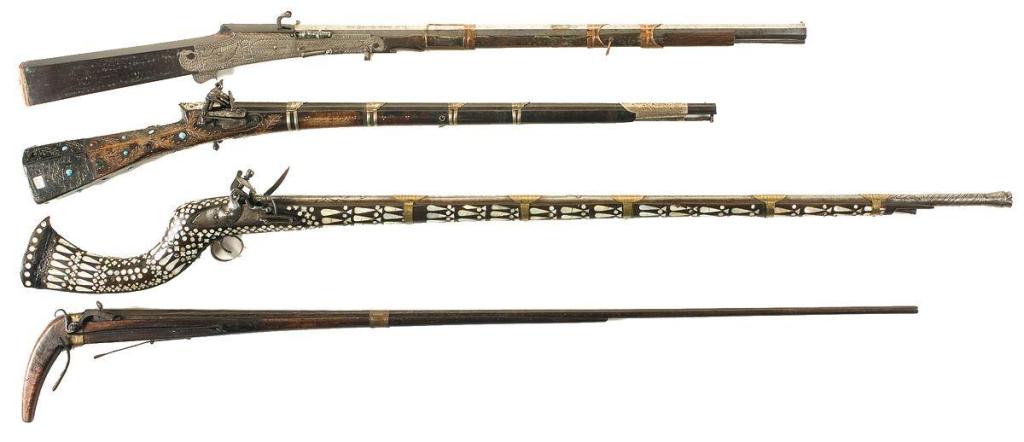
Starbuck heads down to Ahab’s cabin to tell him the news, now that the emergency has passed. As he enters into the outer chamber, he hesitates. He takes on of Ahab’s muskets, the very one that was pointed at him before, and considers it.
Stabuck is absolutely certain that Ahab is going to kill him and every other member of the Pequod‘s crew. The course they are on may as well be directed to the bottom of the ocean. Ahab is absolutely committed to his mad quest of vengeance, body and soul. He will not be persuaded, no matter what Starbuck tries. He considers the rest of the crew fully bought in the same way he is.
Leveling the musket at the door, right at the point where Ahab’s head lies asleep on the other side, he considers his options. They could arrest Ahab, tie him up in this room, but that would be too horrible to bare. The ships is months from any port where he could be removed and charged. He would never yield, no matter what they did. The only option is to end the captain’s life to save the crew.
Finally, Starbuck murmurs his message, and Ahab responds through the door, seemingly in his sleep, saying that he now finally has Moby Dick in his clutches.
Starbuck puts down the musket and leaves, telling Stubb to go down and wake up the captain to give him the message about the condition of the ship.
Analysis
Well, I suppose it’s about time this plot came to a head, as we approach the end of this enormous tome of a novel. This is where the rubber meets the road: when it comes down to it, will Starbuck murder his captain? Just how convinced is he about his own beliefs? And about Ahab’s? How do things lie, at the end of the storm and the revelation of how deep his captain’s madness runs?
Well, now we know: He won’t.
The way I see it, there are two primary reasons for this: he knows it would be wrong, and he still has doubts about his own judgment.
An Evil Thought
There’s one little bit of prose in this chapter that really stood out to me. Right before Starbuck starts murmuring his whole soliloquy, Old Ishmael, writing the book, drops this little bit of judgment:
Starbuck was an honest, upright man; but out of Starbuck’s heart, at that instant when he saw the muskets, there strangely evolved an evil thought; but so blent with its neutral or good accompaniments that for the instant he hardly knew it for itself.
Now, the thought in question is obviously “I could kill Ahab with his own musket right now”, but… is it evil? Is ending one life to save thirty, including his own, truly something that can be judged as such?
Well, it comes down to how one thinks these things through. How does one define “evil” in this context? I am a person who is quite skeptical about the existence of such a thing in any abstract meaning. But the point here is that Starbuck isn’t. He is a christian man, a Quaker, and he would regard the taking of any human life as evil.
However, it’s still more complicated than that. One must think outside of the limited paradigm that there are good and bad things, and one must only do the good things in ones life. A child’s version of morality, that, and one that people fall back into, out of honest fear and confusion with the vagaries and complexities of modern life.
Sometimes, bad things must be done. The fact that there is a good reason for them doesn’t make the things any less bad, actually. Take, for example: war. Wars are bad! They are bad for everyone involved in fighting them. They make the world a worse place. But, sometimes… ya gotta fight a war. One should not abide by an invading army, for example, simply because war is wrong. But that doesn’t mean that everything done in service of the war is good, or indeed the war itself is good.
This is all to say: everyone has their own moral calculus. Their own beliefs and internal systems of judgment and reluctance. It is not realistic for anyone, even a bone-deep Quaker, to perfectly follow the straight and narrow path of moral purity. So, these calculations must be made, and they involve a lot of emotion.
Starbuck thinks killing is wrong, and this is a belief he holds very deeply. Even in this moment of high emotion, he thinks about alternatives. He weighs his options… and falls decisively on one side.
The Weight of Conviction
What would it take for you to end another human’s life? How sure would you have to be about your own beliefs and judgments to make that call?
In the end, Starbuck is not fully convinced. He knows that what Ahab is doing is wrong, but is it actually going to get everyone killed? He’s a madman, but is he imminently dangerous? He could make a case in court, back on land, about Ahab’s negligence, but could he pull the trigger here and now to end his life, extrajudicially? Before the eyes of god?
All he has are doubts. Douts about his captain, doubts about himself.
There is also the more… spiritual dimension to this situation.
Is heaven a murderer when its lightning strikes a would-be murderer in his bed, tindering sheets and skin together?—And would I be a murderer, then, if”—
Starbuck’s final argument, the one that almost convinces him to pull that trigger, is that this is all a natural process in which he has no agency. How can he be blamed for following his own heart? He circles, inevitably, back around to Ahab’s own logic to justify his murder. Is it really wrong to end a life if there’s a good enough reason?
After all, god allows death all the time, does he not bear that responsibility? There must be some way to justify it. If there is, then doesn’t this situation fall under the same aegis?
But… no.
Starbuck is simply not sure enough. His doubts win out in the end. He will not make a murderer of himself.
Traditional Purity
In some sense, this makes Starbuck a perfect representative of christianity in this story. All the old hagiographies of christian saints end with their gruesome deaths, and it is considered a good ending. The eternal reward is what matters, not these earthly distractions.

Now, obviously Starbuck is no gnostic, but this same general attitude seeps into christian belief in many ways, through the centuries. Being upright and moral isn’t just a matter of the here and now, but what happens after death. And since that’s forever, isn’t it really the thing you should grant more weight?
Thus, the practicalities of any course of action are but one consideration among many. If Starbuck doesn’t murder and dies for it, then he will be rewarded in the afterlife. It’s better to do nothing and maintain the integrity of ones own soul than to stain it for the good of others!
But is that true? Is that not its own cynical moral calculus, that would leave the world in the hands of evil men, to do with whatever they please? Should we completely abandon the material plane in service of the spiritual?
It’s important to remember that christianity is a weird doomsday cult that won the lottery and endured to become a world religion. Being persecuted and on the verge of being wiped off the face of the earth is the conditions the early texts were written under. It wasn’t some far-off possibillity. It was not written on behalf of a dominant imperial power, but in spite of one.
So, there is always a bit of hopelessness at its core. Do what you can, and get out, because you’re probably going to die anyway. You and everyone you know. Nobody’s getting out of this life alive, so at least try to keep your soul intact.
Thus, the practical and the spiritual muster their armies against Starbuck’s convictions, and win the day. He must kill Ahab if he really believes him to be a danger. But it would be physically and spiritually dangerous to do so. He may get himself killed in the aftermath, and he may condemn his soul to hell.
Is he really that sure? Apparently not.
Hoo, this was a fun one. For such a long chapter, there’s not actually that much going on, just the battle over one man’s soul by the forces of earth and heaven, that’s all. It’s so interesting how it lines up with things on both sides. It’s not like this is cut and dry in either direction.
What would have happened if Starbuck had killed Ahab? Would he have escaped the wrath of the rest of the crew? Stubb and Flask? Fedallah and the other harpooneers? There are too many unknown factors. It’s all well and good to say that it would’ve been better than everyone else on the crew dying in retrospect, but Starbuck doesn’t have that knowledge.
Perhaps he preserved his eternal reward in the end after all. Ishmael seems to maintain a high opinion of his old boss, in spite of his indecision, and ultimate failure to protect the ship.
Until next time, shipmates!

 The Beige Moth
All caught up 😦 I’ve really enjoyed following your summaries! Thanks for the journey! I’ll probably come back to this book in a decade or so!
LikeLiked by 1 person