
Alright, let’s get back on track.
I’m all moved in now, it went… pretty smoothly, all things considered. I’m still settling in, of course, exploring the neighborhood and whatnot, getting used to new routines. Living in like an actual city again is nice, but very different. And I’m much closer to the sea, which is really energizing. I think that sea breeze is really going to help me survive the summer months.
Summary
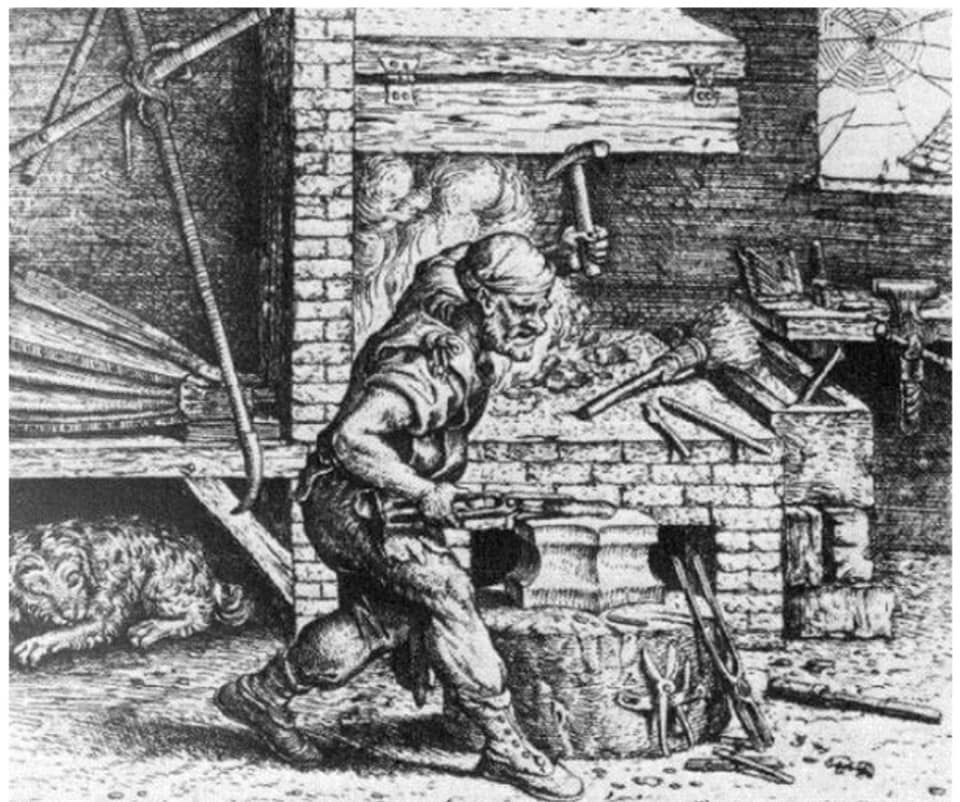
As the Pequod heads for the Japanese cruising grounds, the blacksmith keeps his forge up on the deck, rather than stowing it away. He is busy sharpening, repairing, and creating anew all manner of whale-hunting implements. Harpoons, lances, the great cutting spades used to butcher the whale, and so on.
Ishmael describes for us the character of this blacksmith, a strong yet deeply sorrowful man, simply plodding along in his work with no passion. With much reluctance, Ishmael eventually tells us the story of this poor smith. Back on land, he was a successful man with a happy family, and then lost it all to drink: his home, his wife, and his children. He took to sea as the next best thing to death.
Analysis
A short one this time, but with a lot of weight behind it, hitting with a hammer blow not unlike those thrown by old Perth himself. There are a couple interesting angles here: taking the blacksmith as a generalized template for American tragedy, and as a grim reflection of our narrator, Ishmael.
Self Unmade Man
One of the core tenets of American philosophy, going way back to before the founding of the country, is the abandonment of the community in favor of the individual. So-called “rugged individualism”, forging out and making one’s own destiny, has long been seen as the ideal, and the truth of American society.
Cast off in an unknown land, rather than clinging to one another for support, it was seen as an opportunity to make something new and better. A more atomized society between individuals, rather than a succession of intersecting communal spheres, all mixed together in business and love and commerce.
Of course, that’s just the ideal, and not the reality, but it does inform the stories that we tell as well as the realities that we live. The tale of the blacksmith is a perfect example of that favorite American parable: the man who had it, and then lost it at all, because of his own weakness.
Ishmael paints a picture of an idyllic life, then ruined by the sudden arrival of addiction, which caused ruin in unspoken and unexamined ways.
But one night, under cover of darkness, and further concealed in a most cunning disguisement, a desperate burglar slid into his happy home, and robbed them all of everything. And darker yet to tell, the blacksmith himself did ignorantly conduct this burglar into his family’s heart. It was the Bottle Conjuror! Upon the opening of that fatal cork, forth flew the fiend, and shrivelled up his home.
I really find it fascinating the way that he is so effusive and lyrical setting this up, and then when it comes to the actual fact of the tragedy itself, we zip right past. No need to dwell on the precise details. We get into this backstory with an anecdote about just how badly alcoholism affected the smith, but the actual fall itself is largely elided:
[…]; the house was sold; the mother dived down into the long church-yard grass; her children twice followed her thither; and the houseless, familyless old man staggered off a vagabond in crape; his every woe unreverenced; his grey head a scorn to flaxen curls!

You are lauded as a great sucess when you can build yourself a life with your own two hands, but as soon as you start to falter, there is no support. A self-made man can be unmade any number of ways, but it will always be blamed on him and him alone. And when you fall, there is no community, there is no charity, there is no support to be found.
Rugged individualism is a two-way street, with no exit. It is the extractive logic of capitalism applied on an individual level. If you cannot support yourself, and your family, then they may as well die, as well as you yourself.
Perhaps it is the nightmare curse of the flipside of the dream of “empty land”. An empty land has no use for those who cannot tame it. Either help with this grand project, or get out of the way. Rather than building a new society, you try to wring the society out of a grouping of people as much as possible.
A Fate Worse than Death
Of course, such things are not really that unique to America. They have alcoholics who ruin their lives all over the world. What is more unique here, and relates directly to our narrator, is what this desperation drove the blacksmith to do: go to sea.
The blacksmith considers death to not really be an option, since he doesn’t believe in suicide*. So the next best thing, the other way of escaping all prior associations and finding new wonders and terrors of the unknown, is to go to sea on a ship. At least there, you will find people who care about you, there you find the absolute basic form of community found among those who are stuck with one another in the same physical space.
[…]; and from the hearts of infinite Pacifics, the thousand mermaids sing to them—“Come hither, broken-hearted; here is another life without the guilt of intermediate death; here are wonders supernatural, without dying for them. Come hither! bury thyself in a life which, to your now equally abhorred and abhorring, landed world, is more oblivious than death. Come hither! put up thy gravestone, too, within the churchyard, and come hither, till we marry thee!”
If you’ll recall, this is extremely similar to why Ishmael himself first went to sea as a whaler, because he was depressed and it was the only way he could see to escape those symptoms. Going to a dangerous profession as a way of abandoning responsibility for ones own life, with the knowledge that you will either fulfill that promise and die, or have a new accomplishment to keep yourself going.
Perth experienced ruin and desolation on land, so threw his body to a risky endeavour out of a lack of possibilities. This is the situation we are all put in! Without a network of support, without the compassion of a community, the modern individualistic ambition is that we are all only minutes away from utter ruin and death.
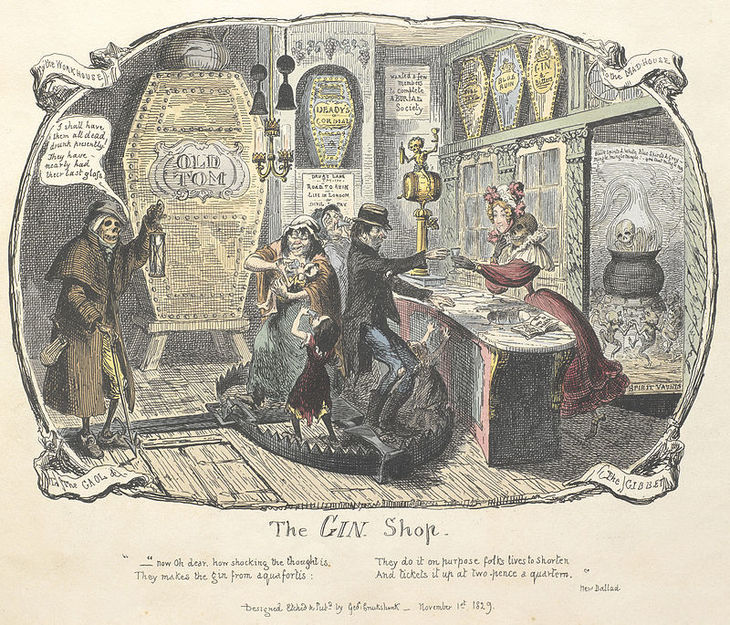
In the name of efficiency and greasing the wheels of production, the blood and tears of all those rugged individuals are harvested. It is that very threat that drives the whaling industry, that drives all modern commerce.
The Wheel Turns
Ultimately, Ishmael lives out the tragedy of Perth, but in reverse. Going to sea brings him to life, expands his horizon, he finds friends and companionship (and gets married). But then, it is all taken from him, by the obsession of his captain.
Thus, his escape is in the creation of this book. In puzzling over whale-lore, in expouding the mythology of Ahab, in examining the minds and characters of his crewmates, now all long dead. He finds himself disgusted by how whalemen are treated, and seeks to create for them a dazzling epitaph of words and images.
In this chapter, Ishmael laments himself, as well as the silent tragedies of the whole crew of the Pequod, and every other whaler on the seas. But at least there’s this, the book you are reading. At least this tale can be told, given one thousandth of the respect that it deserves.
Hoo, man. This is a hard one to get your hands around. It’s a lot going on, wrapped up in this seemingly simple little tragedy. This is a chapter that makes me wish I’d written this blog on my original schedule, so the first handful of chapters were more recent in my memory.
I’ll hope to keep to a weekly schedule now, I thank you for your patience. Any emails or comments I receive always touch my heart, even if I don’t respond directly. I’ll see this thing finished, one way or another!
Until next time, shipmates!

 The Beige Moth
Ah!! You’re back! Thank you for this!
LikeLiked by 1 person
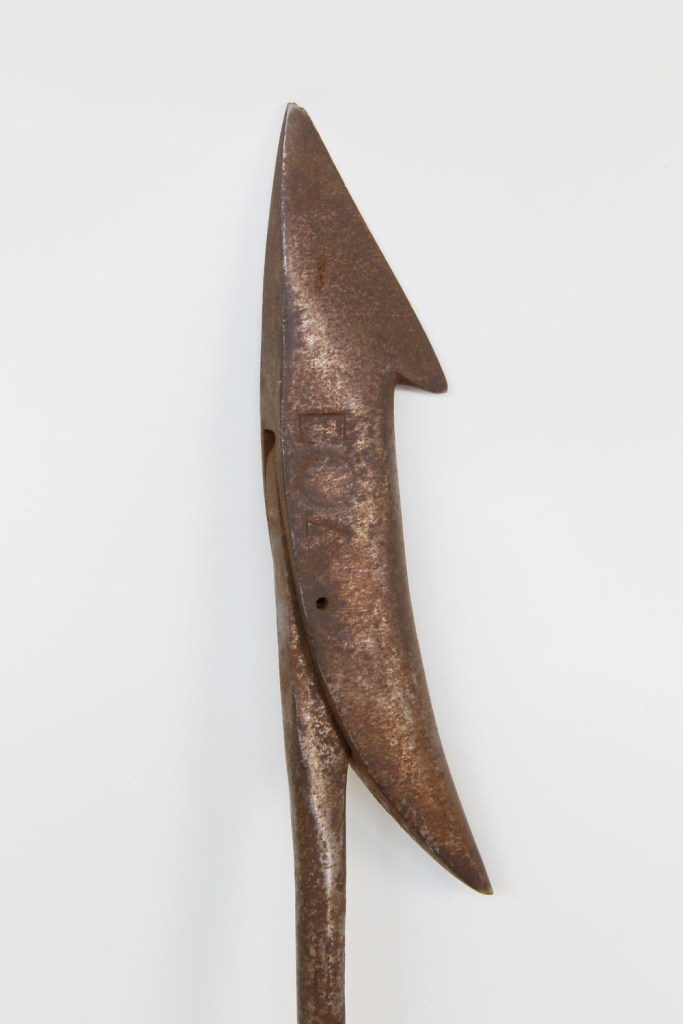
The toggle harpoon shown in the image was developed, invented, by Lewis Temple, a Black Blacksmith from New Bedford around 1835. His story is similar to Perth’s.
Looking forward to The Forge next.
LikeLiked by 2 people
Happy to see this series up and running again! I really want to make a series like this of my own now, maybe someday….
LikeLike